
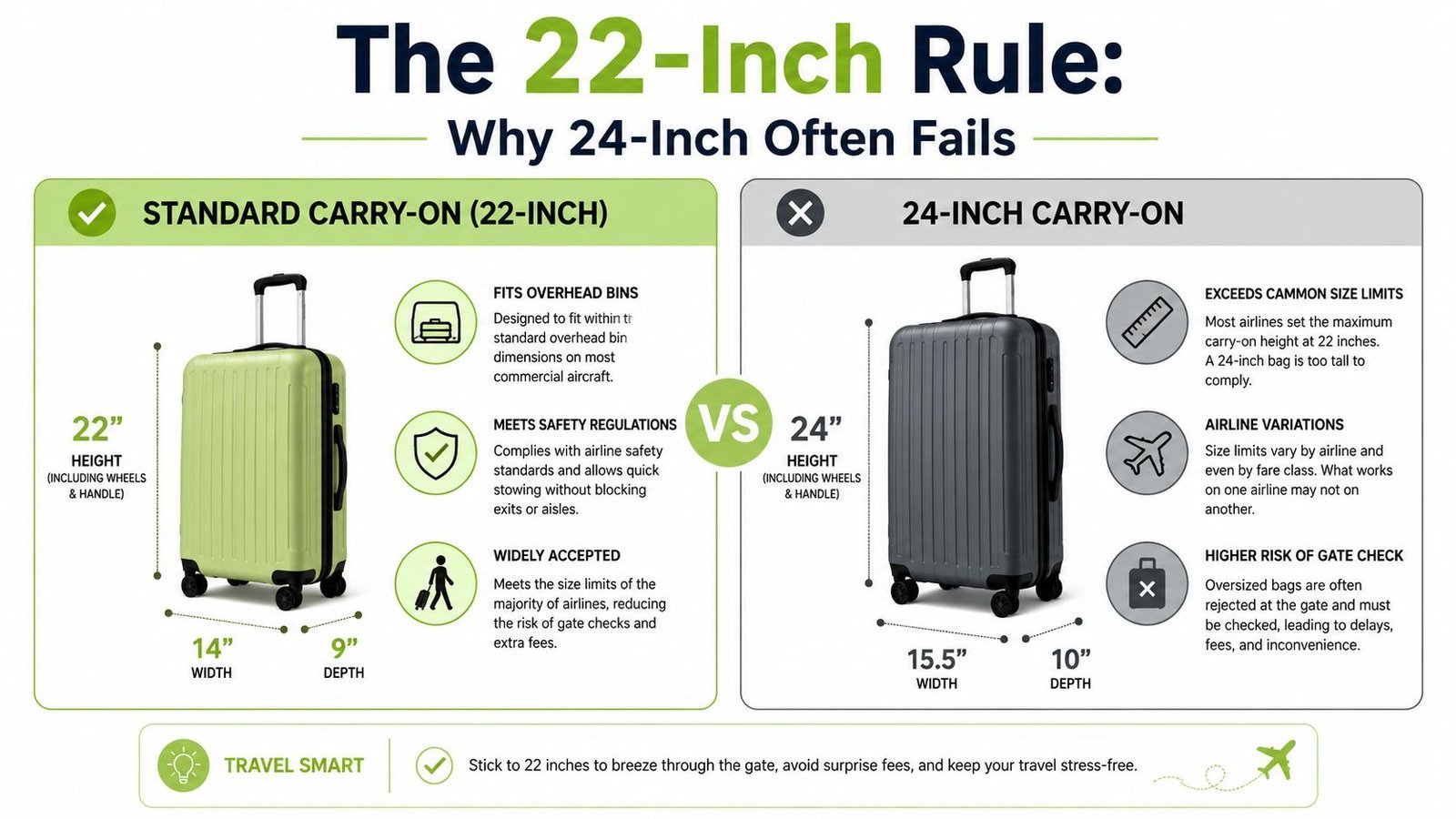
Yes, it’s true that a 22-inch bag is generally considered carry on luggage by most major airlines, but you must include the wheels and handles in that measurement to avoid forced gate checking. Always verify your specific carrier’s rules before you head to the airport to ensure compliance.
Is 22 inches the standard carry on luggage size
The reason this size works is that it fits within the typical overhead bin constraints found on most commercial aircraft. However, the most common mistake people make is measuring only the main compartment of their bag. If your bag is 22 inches plus two inches of wheels, you’re actually carrying a 24-inch bag, which will likely be rejected at the gate. Always use a tape measure to check the total external dimensions, including every protrusion, before you leave home.
How to measure your carry on luggage
- Place your empty bag upright on a flat floor against a wall.
- Extend the handle to its full height and keep it locked in place.
- Use a rigid measuring tape to measure from the floor to the highest point of the handle.
- Measure the width at the widest point, usually the side pockets or the wheel base.
- Check the depth by measuring from the back to the front, including any expanded zippers. Tip: If your bag has an expansion zipper, keep it closed while measuring because airlines check the bag in its most expanded state.
- Compare your final numbers against the Transportation Security Administration carry-on guidelines, which clarify that policies are set by individual airlines rather than federal law.
Measuring travel time requirements
The time it takes to clear security with a 22-inch bag depends on how you pack and how quickly you move through the checkpoint.
| Situation | How long | What changes it | What to watch for |
|---|---|---|---|
| Standard boarding | 10-15 mins | Airport security queue length | Liquids over 3.4 ounces |
| Full flight | 20-30 mins | Overhead bin availability | Gate check requirements |
| International travel | 45+ mins | Customs and document checks | Weight limits (often 15-22 lbs) |
If security takes longer than expected, it’s usually because the bag is overstuffed, making it difficult to scan or fit into the bin.
Verifying your bag is ready
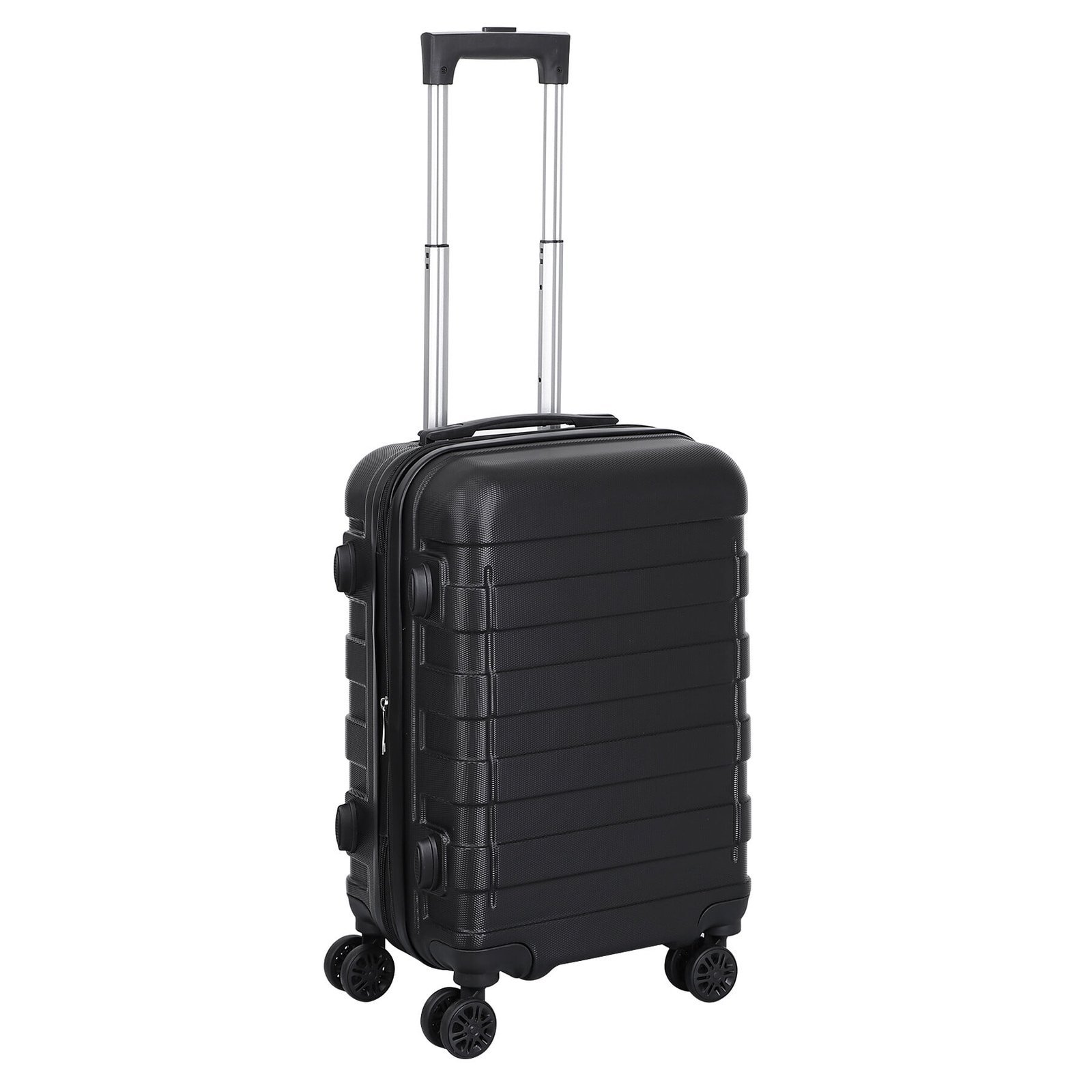
You know your bag is ready when it slides easily into the airline’s metal sizer frame at the check-in counter without any pressure. If you have to push or force the bag into the frame, it’s too big. The official way to verify this is to check the airline’s website under “baggage policy” for the exact linear inch limit. Most airlines allow for a total dimension—length plus width plus height—of 45 inches, though this value varies by carrier. If you’re unsure, measure the bag and compare your total to the airline’s specific published limit.
Common packing mistakes
- Ignoring the wheels: Many travelers forget that wheels add 1 to 2 inches to the total height, which often pushes a 22-inch bag over the limit. Measure from the very bottom of the wheel to the top of the handle to get the true height.
- Overstuffing the front pockets: Bulky items in front pockets add depth that prevents the bag from fitting into the overhead bin or the airline’s sizer box. Keep the front pockets flat to maintain the bag’s intended dimensions and avoid forced gate checks.
- Exceeding weight limits: Some airlines have a weight limit even if the bag fits the size requirements, which can result in unexpected fees. Always check the airline’s weight policy, as some budget carriers limit carry-on weight to as little as 15 pounds.
Frequently asked questions
Can I bring a 22-inch bag on a budget airline?
No, many budget airlines have stricter size limits for carry-on items than major carriers. Always check the airline’s website for their specific sizer dimensions, as some budget carriers require bags to be smaller than 22 inches to avoid extra fees or forced check-in at the gate.
What happens if my 22-inch bag is too big?
If your bag exceeds the airline’s dimensions, you’ll be required to check it at the gate. This often results in a significant fee, and you’ll have to wait at the baggage claim carousel at your destination to retrieve your belongings instead of leaving the airport immediately.
How do I measure my bag if it has soft sides?
You must measure the bag while it’s fully packed to its maximum capacity. Soft-sided bags can bulge when filled, which increases their external dimensions. Use a tape measure to ensure the total height, width, and depth don’t exceed the limits set by your airline when the bag is completely full.
Is a 22-inch bag allowed on international flights?
It depends on the airline, as international carriers often have different size and weight requirements than domestic ones. You should look up the specific baggage policy for your international carrier, as some limit carry-on bags to 20 or 21 inches to accommodate smaller overhead bins on regional jets.
What is the linear inch limit for carry on?
The most common linear inch limit is 45 inches, calculated by adding the bag’s length, width, and height together. This is the industry standard for many major airlines, but you should verify this figure on your airline’s website, as some policies vary based on your ticket class or aircraft size.
Conclusion
Choosing the right luggage is about knowing the rules of your specific airline before you reach the airport. By measuring your bag properly and checking the carrier’s policy, you can avoid the stress of gate checks and extra fees during your journey.
Related guides