
Yes, you can absolutely bring a hiking backpack onto an airplane as your primary cabin luggage, provided its total dimensions fit within the specific airline size limits and it lacks prohibited external attachments.
Key Takeaways

- Measure your loaded bag including all external pockets before heading to the airport.
- Remove loose items and strap them inside to avoid gate-checking.
- Choose packs under forty liters to guarantee compliance with most domestic carriers.
- Compress the suspension system fully to shrink the overall depth of the bag.
Hiking Backpacks as Carry On Luggage
Most major carriers allow outdoor gear in the cabin if it meets their linear dimension rules. The primary challenge is that outdoor bags often feature rigid internal frames and bulky hip belts that push the depth past standard limits. Unlike smooth travel bags, technical packs have protruding pockets that add extra inches. Always check the specific rules for your ticket class, as basic economy fares sometimes restrict you to a smaller personal item only.
Airline Size Restrictions Explained
Carriers calculate maximum allowances by adding the length, width, and depth. The Department of Transportation baggage guidelines confirm that airlines set their own specific size limits. Domestic flights typically permit bags up to twenty-two by fourteen by nine inches. International carriers often enforce slightly smaller maximum dimensions, sometimes capping depth at eight inches. Budget airlines are notoriously strict and might require your bag to fit into a metal sizing bin at the gate.
| Airline Category | Maximum Dimensions | Typical Volume Limit |
|---|---|---|
| Major Domestic | 22 x 14 x 9 inches | 40 to 45 liters |
| International | 21 x 15 x 8 inches | 35 to 40 liters |
| Budget Carriers | 18 x 14 x 8 inches | 30 to 35 liters |
Hiking Packs Versus Travel Bags
Technical gear differs significantly from standard luggage. Hiking models prioritize weight transfer to the hips using a load lifters system, while travel bags prioritize rectangular packing.
- Osprey Talon 44: Features a rigid frame sheet that can’t be removed.
- Deuter Speed Lite 30: Lacks a heavy frame, making it highly compressible.
- Gregory Zulu 40: Includes a suspended mesh back panel that adds two inches of depth.
- Hyperlite Mountain Gear 2400: Uses flexible roll-top closure to easily shrink down.
How to Measure Your Pack
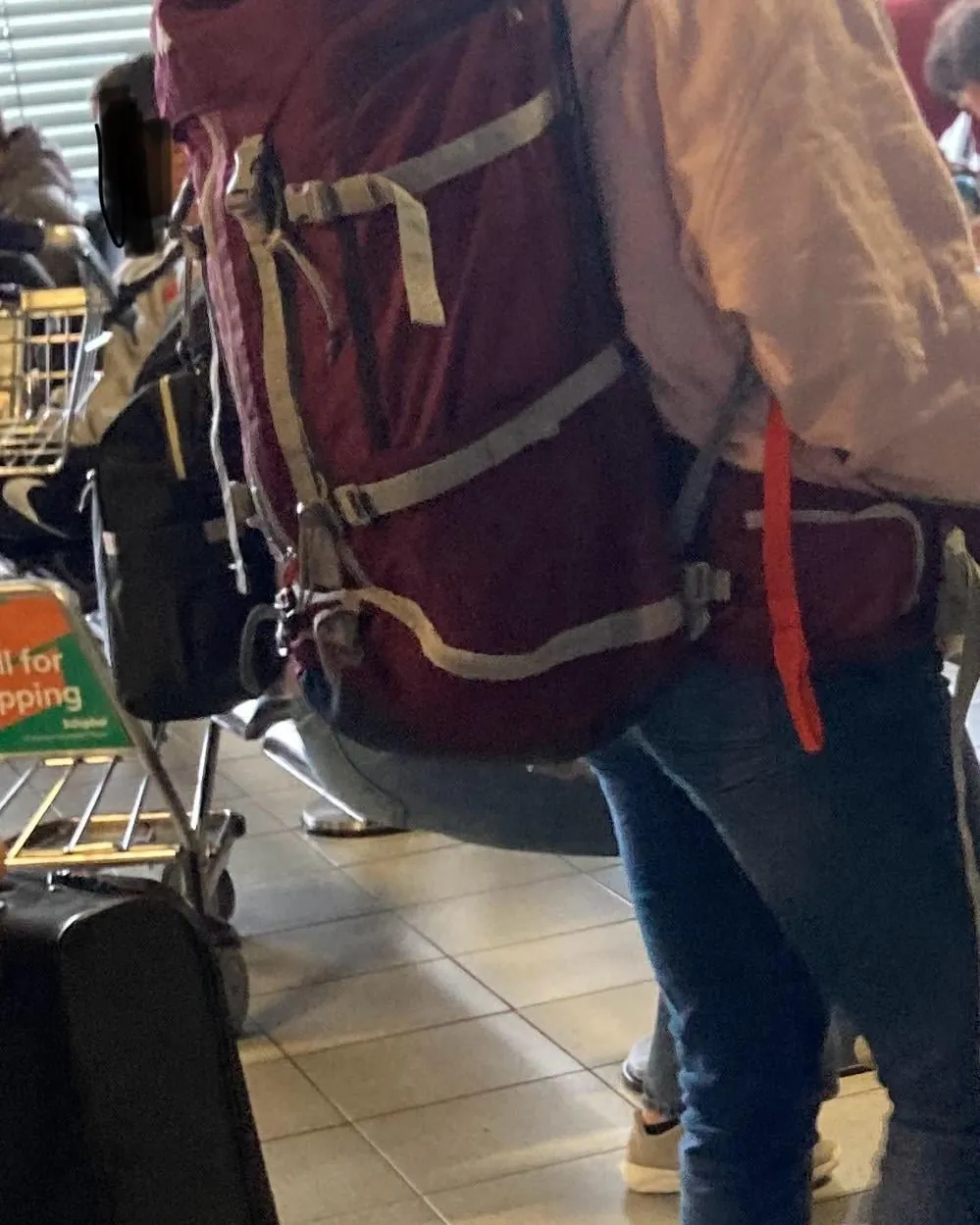
To get accurate numbers, load your bag with your actual travel gear. Measure from the floor to the top of the lid pocket, not just the main compartment. Include the thickness of the waist belt when calculating depth.
Pro Tip: Loosen all compression straps, measure the bag at its absolute maximum expansion, and then tighten the straps to see how much space you can actually save before boarding.
Do Frame Sheets Cause Problems?
Yes, rigid aluminum stays often prevent a bag from squishing into the metal sizer. If your pack has a removable frame sheet, take it out before flying. Some ultralight models use a flexible foam pad instead of metal, which easily bends to fit into tight spaces. If the frame is permanently sewn in, you must ensure the empty dimensions already meet the requirements.
Top Hiking Backpacks for Cabins
Choosing the right model prevents gate-check fees. Here are specific models that consistently fit in overhead bins when packed correctly.
- Osprey Stratos 36: Excellent suspension that compresses well under the size limit.
- REI Co-op Trail 40: Budget-friendly option with a removable frame and clean exterior.
- Patagonia Ascensionist 40: Streamlined alpine pack with zero protruding external pockets.
- Granite Gear Virga 26: Frameless design that easily squishes into any sizing bin.
Packing Strategies for Maximum Space
Maximizing your volume requires careful organization. Use the following schedule to pack efficiently.
| Packing Zone | Ideal Gear Type | Compression Method |
|---|---|---|
| Bottom Compartment | Sleeping bag, soft clothes | Roll tightly, no stuff sack |
| Main Core | Heaviest items, electronics | Place close to the back panel |
| Top Lid | Toiletries, travel documents | Use small zippered pouches |
| Exterior Straps | Jacket, wet gear | Tuck inside if flying |
Warning: Never attach your sleeping pad or tent to the outside of your pack when walking through the airport, as these external items will immediately cause the gate agent to force you to check the bag.
Will Gate Agents Check Dimensions?
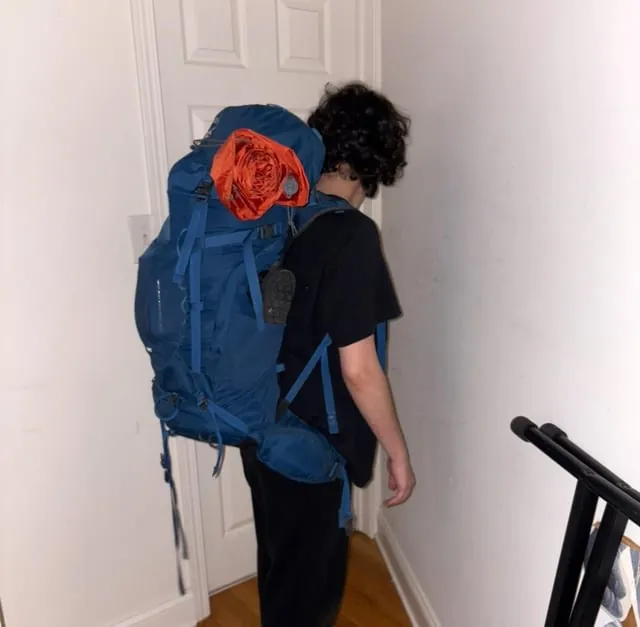
Enforcement varies wildly depending on the airport and how full the flight is. Budget airlines almost always check bag dimensions at the gate. Legacy carriers usually only check if the overhead bins are completely full. If your bag looks visibly oversized or bulging, you’ll likely face a gate check fee.
Frequently Asked Questions
Can I bring trekking poles in my carry on?
No, the Transportation Security Administration strictly prohibits trekking poles in the cabin because they can be used as weapons. You must pack them inside your checked luggage or ship them to your destination ahead of time. Attempting to bring them through security will result in confiscation.
Do hip belts count toward the total dimensions?
Yes, airlines measure the bag at its absolute widest and deepest points. A bulky hip belt adds significant depth. If your pack features a removable belt, take it off and pack it inside the main compartment before approaching the gate agent.
What happens if my bag is too big?
If your pack exceeds the limits, the airline will force you to check it at the gate. You’ll likely pay a hefty gate check fee, which is often more expensive than paying for a standard checked bag online in advance.
Are frameless backpacks better for flying?
Yes, frameless models lack rigid aluminum stays, making them highly compressible. A frameless pack can easily be squished into the metal sizing bin at the gate, ensuring you avoid unexpected fees and keep your gear with you in the cabin.
Conclusion
Measure your fully loaded hiking backpack tonight using a standard tape measure, ensuring you include all external pockets and straps in your calculations. Once you confirm it meets your airline’s limits, loosen the compression straps and practice squishing it into a tight space to prepare for the gate.