
Yes, you can carry on a backpacking pack if it fits within the airline’s specific size limits. Most major carriers require your bag to be no larger than 22 x 14 x 9 inches to fit in the overhead bin. You must measure your pack before arriving at the airport.
Carry on backpacking pack size limits
Photo: exploringwild.com on Google
The rules for your bag depend on the airline you’re flying with and the ticket class you booked. While some budget carriers have very small limits, most standard airlines follow a similar size policy for overhead storage.
| Airline | Max Dimensions (inches) | Typical Weight Limit |
|---|---|---|
| United Airlines | 22 x 14 x 9 | None |
| American Airlines | 22 x 14 x 9 | None |
| Delta Air Lines | 22 x 14 x 9 | None |
| Southwest Airlines | 24 x 16 x 10 | None |
| Spirit Airlines | 22 x 18 x 10 | 40 pounds |
If your pack is soft-sided, you can often compress it to meet these numbers. If it has a rigid frame, you must ensure the frame itself doesn’t exceed the allowed height or width.
What decides if your bag is allowed
The main factor deciding if you can bring your pack is the total size of the frame and the amount of gear inside. Airlines don’t care about the “backpacking” label; they only care if it fits into their metal sizing bins. A bag that looks small might still be too tall because of a stiff frame.
You should also consider the items inside your bag, as security agents will remove any prohibited tools or liquids at the checkpoint. The Transportation Security Administration provides a full list of what you can bring through the gate. If you have trekking poles or knives, you must pack them in a checked bag. If the frame is flexible, you can squeeze it into the sizer; if it’s rigid, you must check it if it exceeds the limit.
Steps for packing for the cabin
Photo: coalatree.com on Google
- Empty the main compartment completely to ensure no prohibited items like multi-tools or full-size liquids are hiding at the bottom.
- Remove the hip belt if it’s detachable, as this often reduces the total width of the pack enough to fit into the sizing bin.
- Loosen all compression straps so you can shape the pack into a thinner profile that slides easily into the overhead bin.
- Measure the bag while it’s lying flat on the floor to confirm it stays within the 22 x 14 x 9 inch limit used by most carriers.
- Pack your heaviest items in the center of the bag to keep the weight balanced, which makes it easier to lift into the bin.
The mistake people make with frames
Many travelers ignore the external frame height, which leads to their bag being rejected at the gate. A pack might look small, but if the aluminum or plastic frame is 24 inches tall, it won’t fit in the overhead bin.
This mistake often results in a last-minute gate check fee, which can be an expensive surprise depending on the airline. Always measure the frame from the bottom of the base to the top of the highest point, not just the fabric.
When to stop and get help
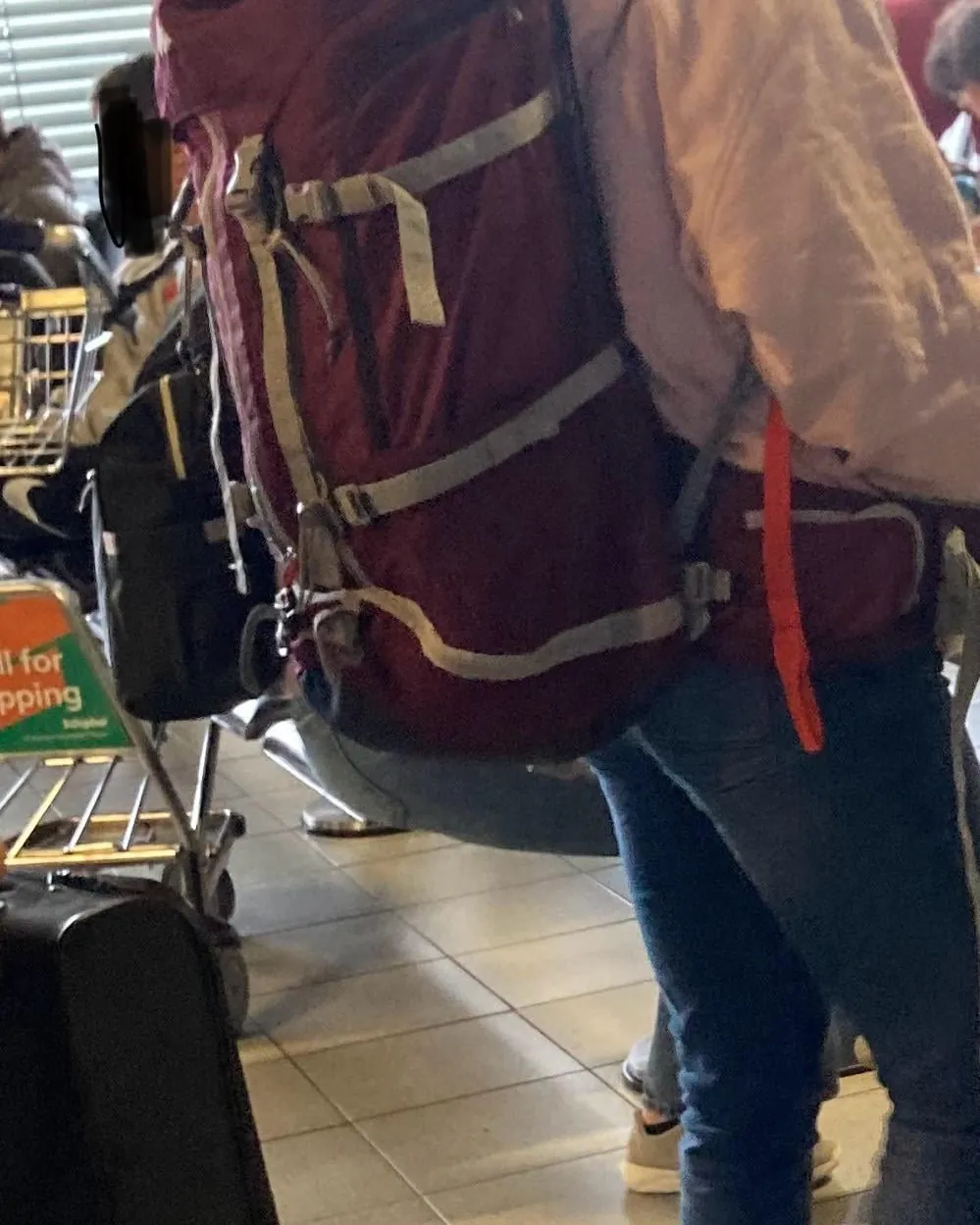
You should stop trying to carry on your pack if you see these signs: * The rigid frame is clearly taller than the airline’s metal sizing bin. * You’re carrying specialized climbing gear or sharp tools that are banned in cabins. * The pack weighs more than the limit set by your specific low-cost carrier.
If you reach this point, you must check the bag at the ticket counter. Don’t attempt to force a rigid frame into a small space, as it can damage the plane’s bin or your own equipment.
Frequently asked questions
Can I carry on a backpacking pack with a frame?
Yes, you can carry on a pack with a frame if the total height, width, and depth fit within the 22 x 14 x 9 inch limit. You must measure the frame itself, as rigid parts can’t be compressed.
How much weight is allowed for a carry-on?
Most major US airlines have no weight limit for carry-on bags, but you must be able to lift the pack into the overhead bin by yourself. Budget airlines often limit this to 40 pounds.
Is it safe to carry on expensive camera gear in my pack?
Yes, it’s safer to carry expensive items in the cabin with you rather than checking them. You should keep your fragile gear in a smaller internal bag so you can remove it quickly if needed.
What happens if my pack is too big at the gate?
If your pack is too big, the airline will force you to gate-check it. You’ll likely pay a fee, and you might have to wait at the baggage claim area after you land.
Does it matter if I have a personal item too?
Yes, most airlines allow one carry-on and one personal item. Your personal item must fit under the seat in front of you, which is usually a space around 18 x 14 x 8 inches.
Can I bring trekking poles in my carry-on?
No, you can’t bring trekking poles in your carry-on bag. The security checkpoint rules classify these as prohibited items, so you must store them in your checked luggage before you enter the airport.
Conclusion
Check your pack’s dimensions against the airline’s website before you head to the airport. If the bag fits the size requirements, you’ll be able to board with it. If the frame is too rigid or tall, you should check the bag to avoid extra fees.
Related guides