
Yes, you can carry on a backpacking backpack, provided its packed physical dimensions comply with your airline’s maximum carry-on allowances. Modern packs under 45 liters generally fit overhead bins if packed thoughtfully.
Key Takeaways

- Packs sized 40 to 45 liters represent the maximum capacity threshold for domestic and international overhead bins.
- A standard US domestic carry-on limit is 22 x 14 x 9 inches, which strict gate agents verify using metal sizing boxes.
- Rigid metal or composite internal frame stays can’t be squished; if the frame measures over 22 inches, the pack must be checked.
- Loose harness webbing and hip straps must be secured to prevent snagging on conveyor belts or bin doors.
- Trekking poles, tent stakes, and pocketknives are prohibited in the passenger cabin by transport safety agencies.
Carry-On Backpack Size and Dimension Rules
Airlines base overhead bin allowances on linear measurements, not internal volume. A pack labeled as 40 liters by one manufacturer might feature a 24-inch back panel, making it too tall for regional jets.
The standard limits for major carriers provide a baseline for your packing strategy:
| Airline Category | Typical Dimensions (Inches) | Typical Weight Limits |
|---|---|---|
| US Domestic Legacy (Delta, United, American) | 22 x 14 x 9 in | No weight limit (must lift unaided) |
| US Budget Carriers (Spirit, Frontier) | 22 x 18 x 10 in | 35 to 40 lbs |
| European Carriers (Lufthansa, Air France) | 21.6 x 15.7 x 9 in (55 x 40 x 23 cm) | 17.6 to 26.4 lbs (8 to 12 kg) |
| Asian Carriers (Singapore, ANA) | 22 x 15.7 x 9.8 in (56 x 40 x 25 cm) | 15.4 to 22 lbs (7 to 10 kg) |
Standard Packs vs. Travel-Specific Rucksacks
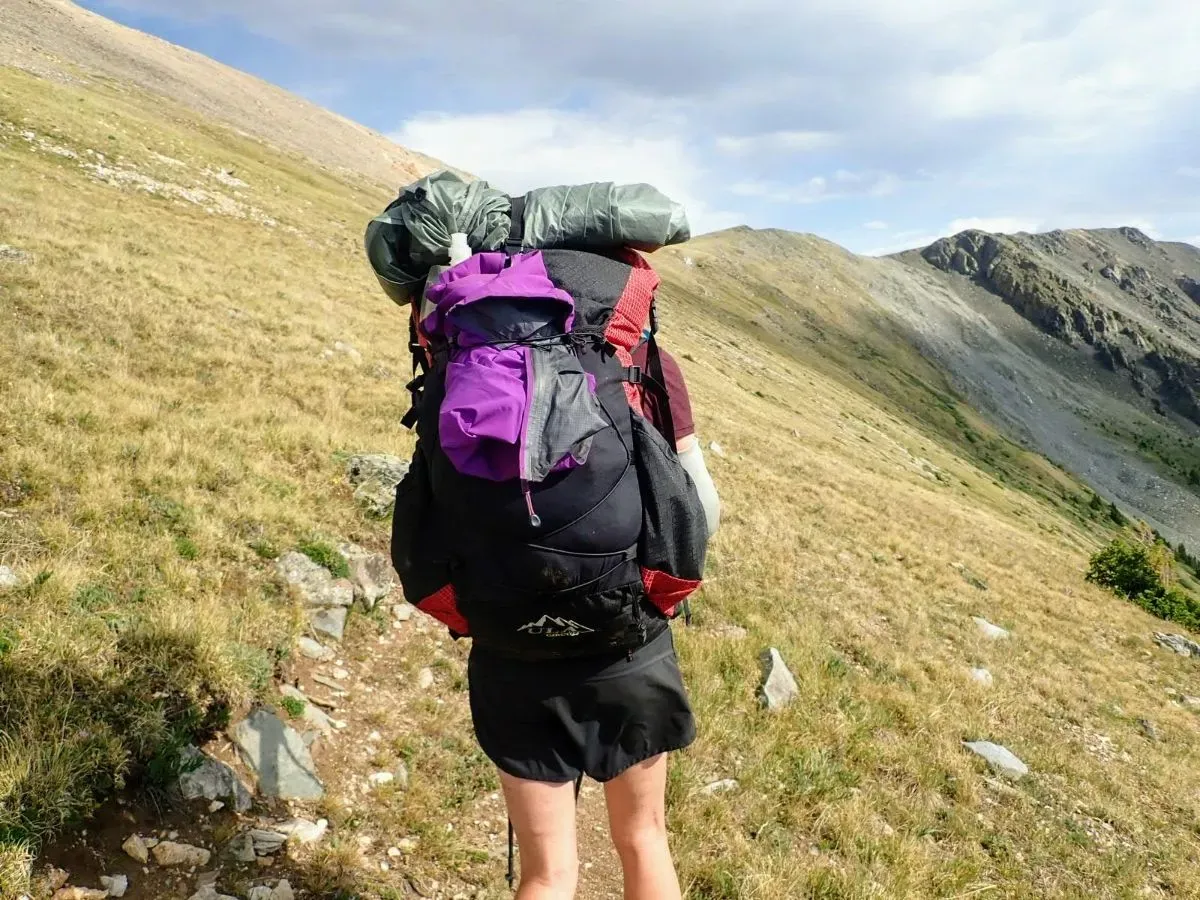
Traditional hiking rucksacks prioritize comfort over airline compliance.
- Osprey Farpoint 40: Features a stowable backpanel, fixed rigid perimeter frame matching airline limits, and lockable slider zippers.
- REI Co-op Trail 40: Employs an internal spring steel contour while keeping overall vertical length right at 22 inches.
- Gregory Tribute 40: Includes a protective transit cover that fully encases the hip belt during transit.
- Hyperlite Mountain Gear Southwest 2400: An ultralight roll-top pack using flexible Dyneema composite fabric that easily rolls down to legal height limits when not fully packed.
Warning: Don’t overstuff a roll-top or top-loading pack. An overfilled pack bulges into a cylinder, quickly violating the 9-inch depth rule and risking an expensive gate-check fee.
Can You Carry On a Wilderness Pack?
Taking a standard multi-day expedition pack into an airplane cabin is difficult. Week-long packs like the Osprey Atmos AG 65 or Gregory Baltoro 65 have frames measuring 26 to 32 inches.
Carrying a large pack requires removing the top lid (brain) entirely, leaving the internal frame stays partially exposed, and underfilling the main sack.
| Pack Capacity | Cabin Eligibility | Frame Factor |
|---|---|---|
| 30 to 35 Liters | Guaranteed fit | Flexible or short frames; easily fits bins |
| 40 to 45 Liters | Fits if packed properly | Maximum allowable limit; requires tight cinching |
| 50 to 55 Liters | High risk of rejection | Rigid frame usually exceeds 24 inches |
| 60+ Liters | Prohibited as carry-on | Internal stay is too long; must be checked |
Dealing With Trail Gear at Security
Pack outdoor equipment according to security regulations.
- Trekking poles: Hiking poles, including folding models like the Black Diamond Distance Carbon Z, are systematically confiscated by screening personnel if carried through checkpoints.
- Tent stakes: Metal or titanium stakes are treated as sharp instruments; plastic stakes occasionally pass, but remain at the screener’s discretion.
- Stove fuel: Isobutane canisters and white gas bottles are entirely forbidden on commercial flights, in both carry-on and checked luggage. Purchase fuel canisters at your destination.
- Pocketknives: Fixed or folding camping knives, such as a Benchmade Bugout or basic Swiss Army Knife, are never permitted in the aircraft cabin.
Pro Tip: Ship your trekking poles, stakes, and camp knife to a post office near your destination trail via general delivery to avoid checking your primary backpack.
How to Prep Your Pack for Boarding
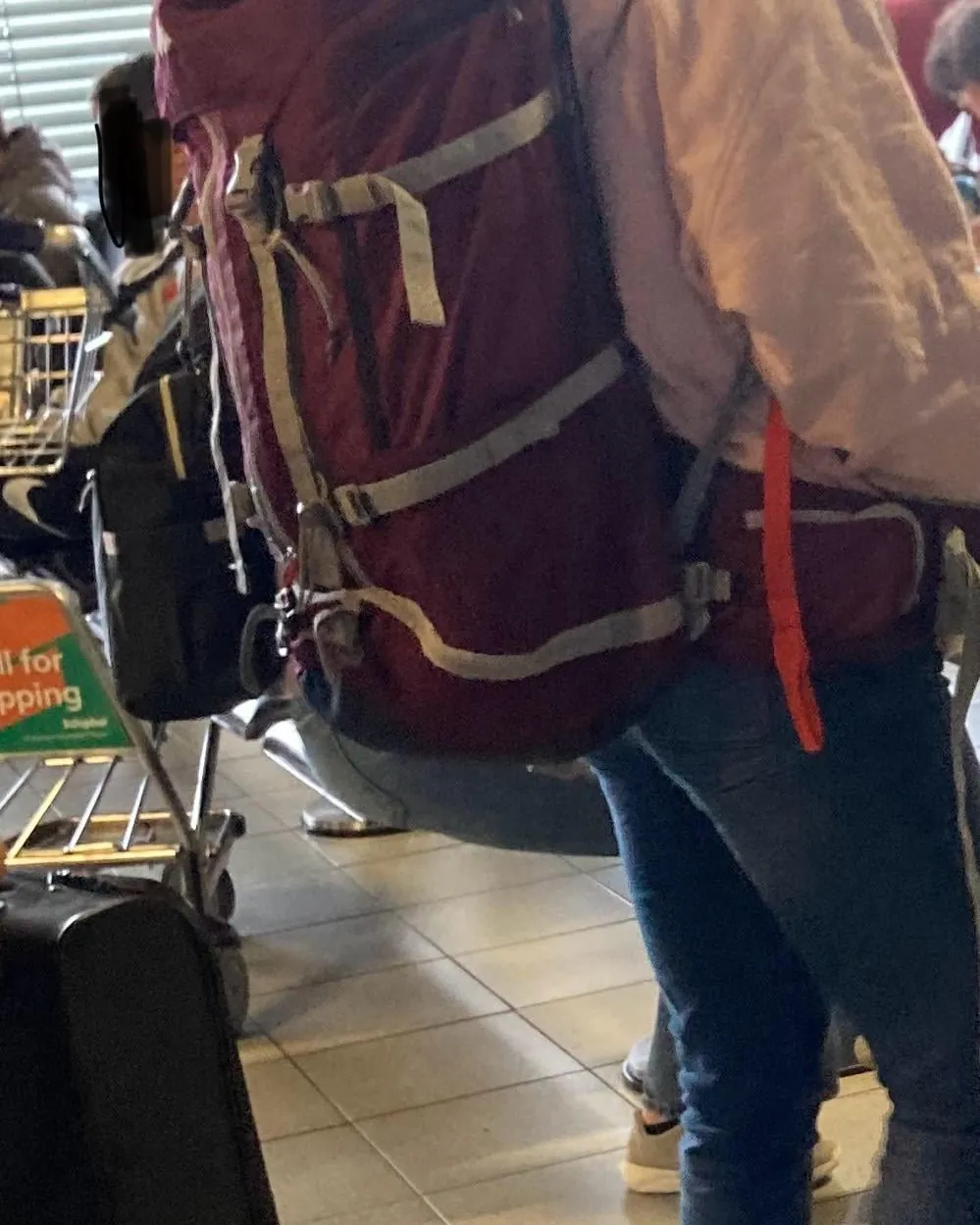
Loose straps and d-rings are hazards around airport machinery. They snag on baggage conveyor ramps, rip in overhead bins, and hit seated passengers as you walk down narrow airplane aisles.
Secure the Straps and Harness
Buckle hip and sternum straps against the pack. Cinch all dangling straps. If your pack lacks a stowaway harness flap, slide the entire bag into a lightweight nylon duffel, such as the Sea to Summit Ultra-Sil Duffel, before passing through the boarding gate.
Maximize Your Personal Item Allowance
Airlines allow one carry-on bag plus one smaller personal item intended to sit under the seat ahead. Distribute equipment efficiently:
- Transfer dense tech gear, like battery banks and camera kits, into a small packable daypack.
- Wear your bulkiest trail items through the boarding gate, including heavy Vibram-soled hiking boots and down insulating jackets.
- Keep your water reservoir hydration bladder completely empty until you pass through security checkpoints.
Related guides
- Can I Carry on a Hiking Backpack: Airline Size Guide
- Can Backpacks Be Used as Carry Ons: Airline Size Guide
- Can a Backpack Be Used as a Carry On? Airline Size Guide
Frequently Asked Questions
Will flight attendants make me check a 50-liter backpack?
Yes, if the pack contains a rigid internal frame measuring over 22 inches in height. Gate agents regularly force travelers with visible external hiking frames to check their packs at the jet bridge.
Can you put an internal frame backpack in an overhead bin?
You can place an internal frame pack in the bin if its frame length measures 22 inches or less. Packs must fit wheels-first or base-first into the compartment; bags placed sideways consume excessive overhead bin real estate and violate boarding policies on full flights.
Are camping stoves allowed in carry-on luggage?
Camping stoves are permitted in carry-on baggage only if they’re completely cleaned of all combustible fuel residue. Empty burner heads are generally accepted.
What should I do if the airline forces a gate check?
Remove lithium battery banks, navigation devices, passports, and essential medications before handing the bag over. Buckle all hip straps backward around the pack body, compress side straps to eliminate loose loops, and ask the gate agent to attach an extra fragile baggage tag.
Can I carry on a pack with an external frame?
No, external frame packs feature large aluminum tubing skeletons that exceed standard carry-on length and width limitations.
Conclusion
Measure your backpack’s rigid frame height from top to bottom with a tape measure right now to ensure it sits at or under 22 inches before heading to the airport.