
Yes, you can carry on a hiking backpack provided it meets airline size limits. You should check your specific airline’s maximum dimensions before you leave for the airport, as you can carry on a hiking backpack only if it fits within the overhead bin or under the seat.
Selecting the right size hiking backpack
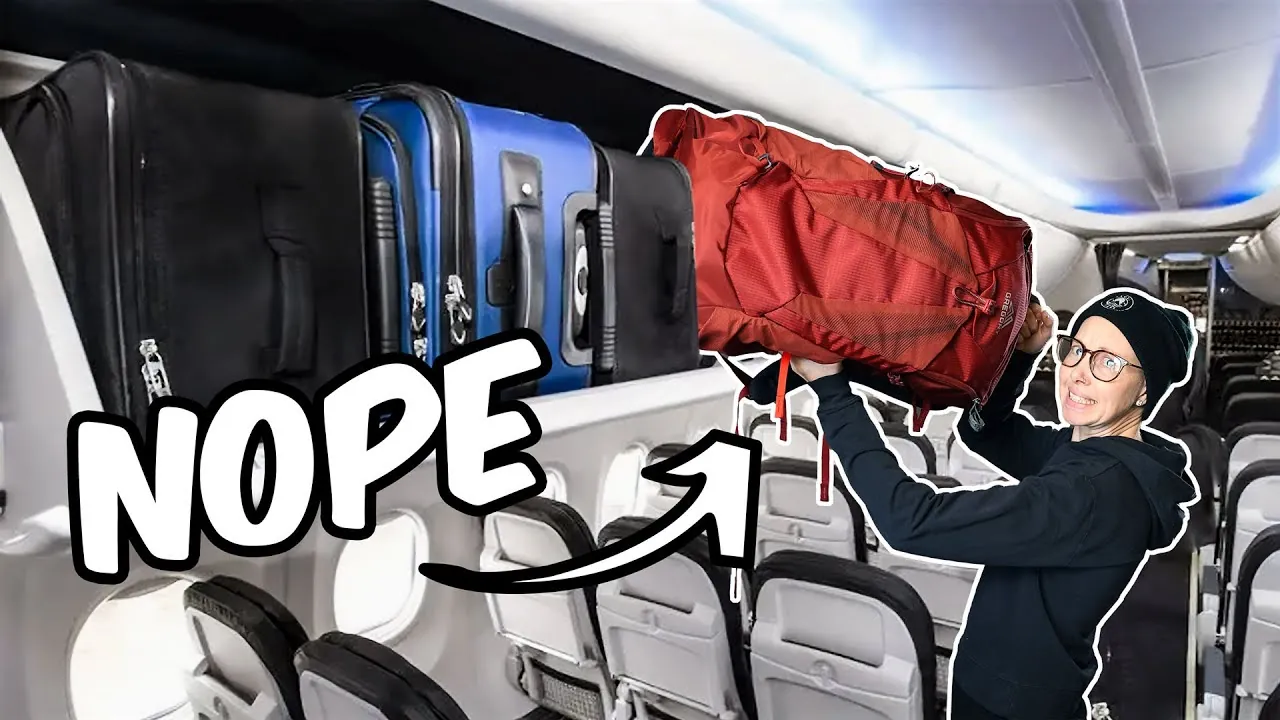
Most airlines allow one carry-on bag and one personal item. The size of your pack determines whether it travels in the cabin or the hold.
| Your situation | Answer | Why |
|---|---|---|
| Pack is 40L or less | Usually yes | Fits most standard overhead bins |
| Pack is 50L or more | Usually no | Exceeds typical airline size limits |
| Bag is mostly empty | Yes | Can be compressed to size |
| Bag has metal frame | Often no | Rigid frames often exceed dimensions |
| Budget airline flight | Check rules | They have stricter size requirements |
| Flying with trekking poles | No | Sharp items are prohibited in cabins |
Rules for cabin baggage dimensions
Airline baggage rules are based on total volume and physical dimensions. The standard carry-on size for most major carriers is 22 x 14 x 9 inches, including wheels and handles. If your pack is larger than this, it will likely be gate-checked. This means you must leave it at the boarding gate, and it will be placed in the cargo hold.
The Transportation Security Administration provides specific guidance on prohibited items that you might keep in a hiking bag, such as fuel canisters or multi-tools. You must remove these items before arriving at the security checkpoint. If your pack is rigid or has a large external frame, it may not fit even if the volume is low. If the pack is soft-sided, you can adjust the straps to reduce its profile; if it’s hard-sided or has a fixed frame, you must measure the frame itself rather than the fabric capacity.
Preparing your pack for the cabin
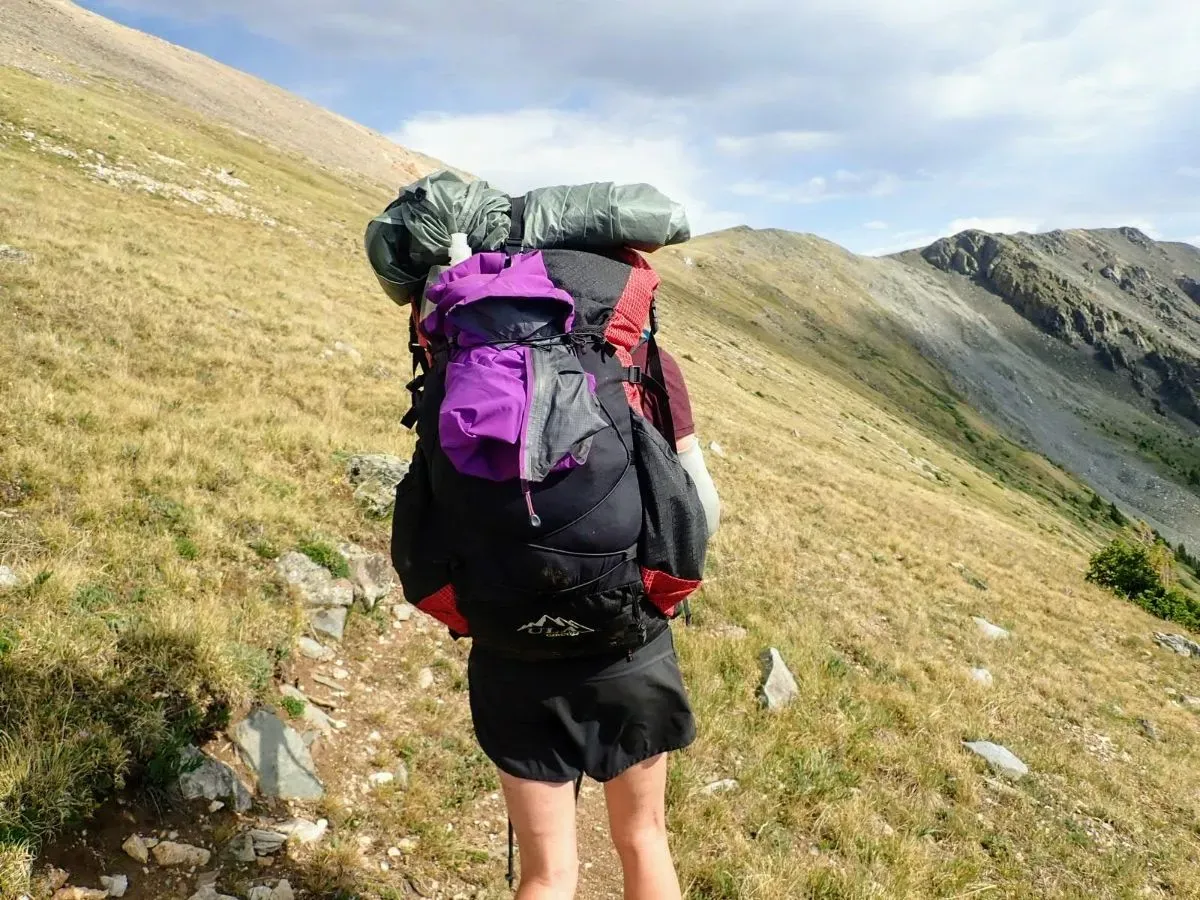
Follow these steps to ensure your gear passes through security and fits on the plane.
- Empty all outer pockets: Remove small items like snacks or chargers so you can compress the bag fully.
- Remove restricted items: Take out any pocket knives, trekking poles, or liquid containers over 3.4 ounces.
- Tighten all compression straps: Pull the side straps tight to shrink the pack’s depth and width.
- Measure the dimensions: Use a tape measure to confirm the pack is under 22 x 14 x 9 inches while fully loaded.
- Check the weight: Weigh your pack on a bathroom scale to ensure it’s under the typical 22-pound limit for many international carriers.
The common mistake with pack frames
Many travelers make the mistake of measuring only the fabric body of their pack while ignoring the rigid frame or hip belt. This mistake often costs you a surprise check-in fee at the gate if the agent decides the bag is too large. You can avoid this by measuring your pack when it’s fully packed, including the stiffest parts of the suspension system. A pack that appears small when empty often becomes rigid and oversized once it’s filled, so always measure it in its final, ready-to-travel state.
When to check your bag
You should stop trying to carry on your bag if it meets any of these conditions, as it may be denied at the gate:
- The frame is rigid and exceeds 22 inches in length.
- You’re carrying fuel canisters or stoves that have been used.
- The pack is too heavy to lift into the overhead bin without help.
- You have sharp items like ice axes attached to the exterior.
If you reach this point, you must check the bag at the ticket counter to avoid delays or confiscated gear.
Frequently asked questions
Can I carry on a hiking backpack with trekking poles?
No, you can’t carry on trekking poles because they’re considered sharp objects and must be checked in the cargo hold. You should attach them to your checked luggage or leave them at home.
How much does my carry-on bag weigh?
Most airlines limit carry-on weight to 22 pounds, though you must check your specific ticket, as budget airlines often enforce lower limits starting at 15 pounds for some economy fares.
What happens if my backpack is too big?
If your bag is too big, the airline will force you to check it at the gate, which often involves a higher fee than paying for a checked bag in advance.
Is it safe to put a hydration bladder in a carry-on?
Yes, it’s safe to carry a hydration bladder, but it must be completely empty of all water when you go through the security checkpoint to comply with liquid restrictions.
Does the hip belt matter for carry-on size?
Yes, the hip belt matters because it adds width to the pack, and if it can’t be removed or tucked away, it might prevent your bag from fitting inside the airport sizing bin.
How do I measure my pack correctly?
You measure your pack by placing it against a wall and using a tape measure to check the length, width, and depth, making sure to include any protruding straps or frame parts.
Conclusion
Start by measuring your pack’s frame and width while it’s fully loaded to see if it meets your airline’s specific limits. If it fits, you can proceed to the gate with confidence; if it does not, check it early to avoid fees. Stop immediately if you find restricted tools inside.