
You can typically carry a bag measuring up to 22 x 14 x 9 inches (56 x 35 x 23 cm) as your main carry-on item, though the maximum size backpack you can take on a plane depends mostly on the airline’s specific overhead bin requirements. Always check your booking confirmation for exact limits.
Most airlines allow one carry-on bag and one smaller personal item, such as a purse or laptop bag, that fits under the seat in front of you. The most common mistake is assuming that a backpack labeled “travel size” will automatically fit every airline’s sizer. Before you head to the airport, check your airline’s specific baggage policy on their official website luggage guide. If your pack is too large, you might be forced to check it at the gate for a fee.
Packing and Measuring Your Bag
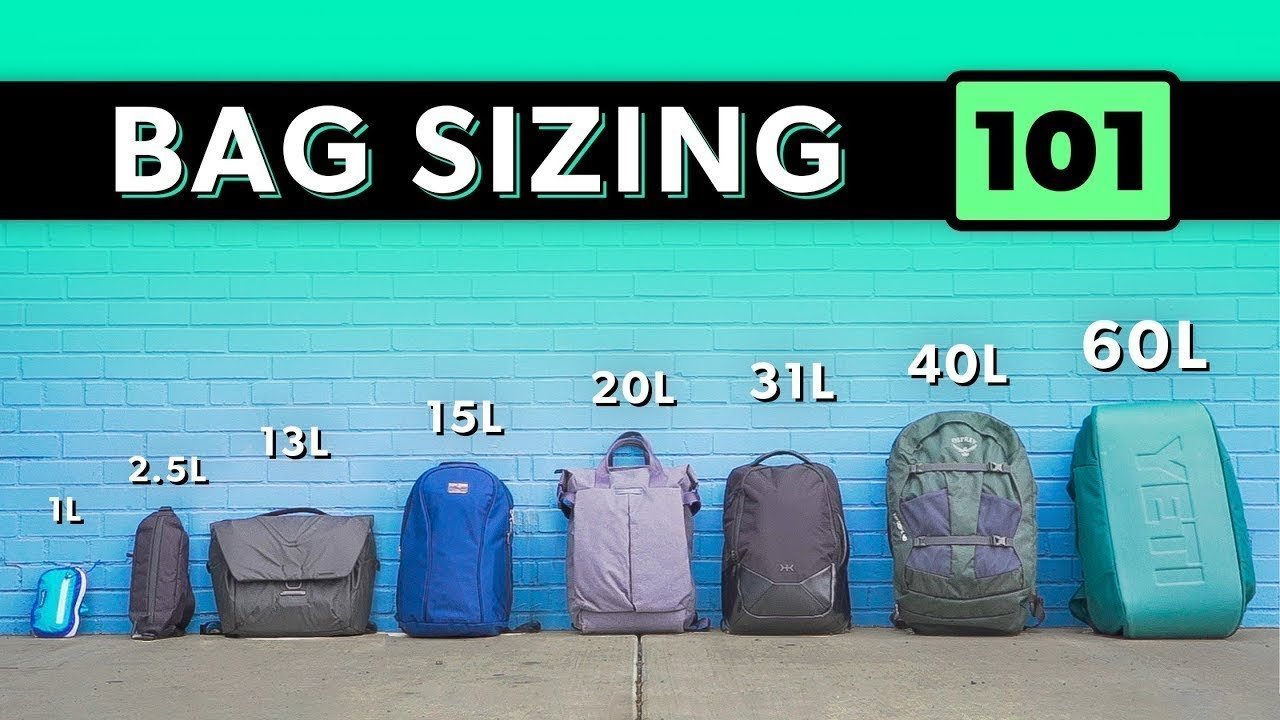
- Measure your backpack while it’s completely empty to see the true frame size, then measure it again when packed to ensure it doesn’t bulge past the standard 9-inch depth.
- Tighten all exterior compression straps to pull the pack closer to your back, which reduces the profile and prevents the bag from catching on bin edges.
- Remove any bulky items from the outside pockets, such as water bottles or sleeping pads, and store them inside the main compartment to keep the dimensions slim. Tip: Use a soft-sided bag rather than a rigid internal frame pack if you’re flying with budget carriers, as they’re more forgiving in tight sizers.
- Weigh your packed bag on a bathroom scale to ensure it remains under the airline’s weight limit, which is often 15 to 22 pounds (7 to 10 kg) depending on the fare class. Tip: If your bag feels heavy, move your densest items, like shoes or electronics, to your personal item bag to shift the weight balance.
- Verify that your personal item is small enough to fit under the seat, usually around 18 x 14 x 8 inches, to avoid needing extra space in the overhead bins.
Airline Carry-On Size Variations
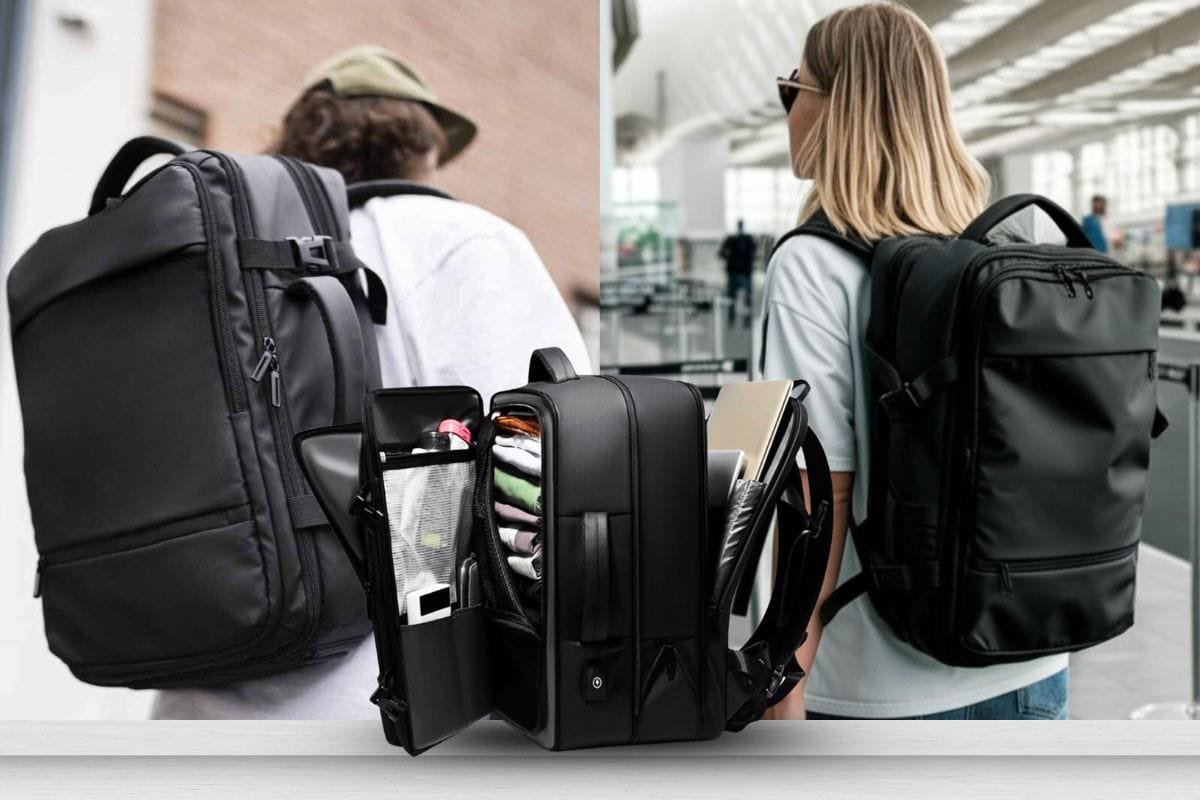
The dimensions of your backpack change based on the airline’s policy and the specific class of service you booked. While many carriers share similar limits, budget airlines often enforce stricter rules to maximize space.
| Airline Class | Typical Depth | What changes it | What to watch for |
|---|---|---|---|
| Major Carriers | 9 inches | Aircraft size | Rigid frames |
| Budget Airlines | 8 inches | Ticket type | Total weight |
| Regional Jets | 7 inches | Bin shape | Protruding pockets |
If your bag measures significantly over these limits, contact your airline before arriving at the airport to see if you can pre-pay for checked luggage.
Checking Your Bag’s Fit
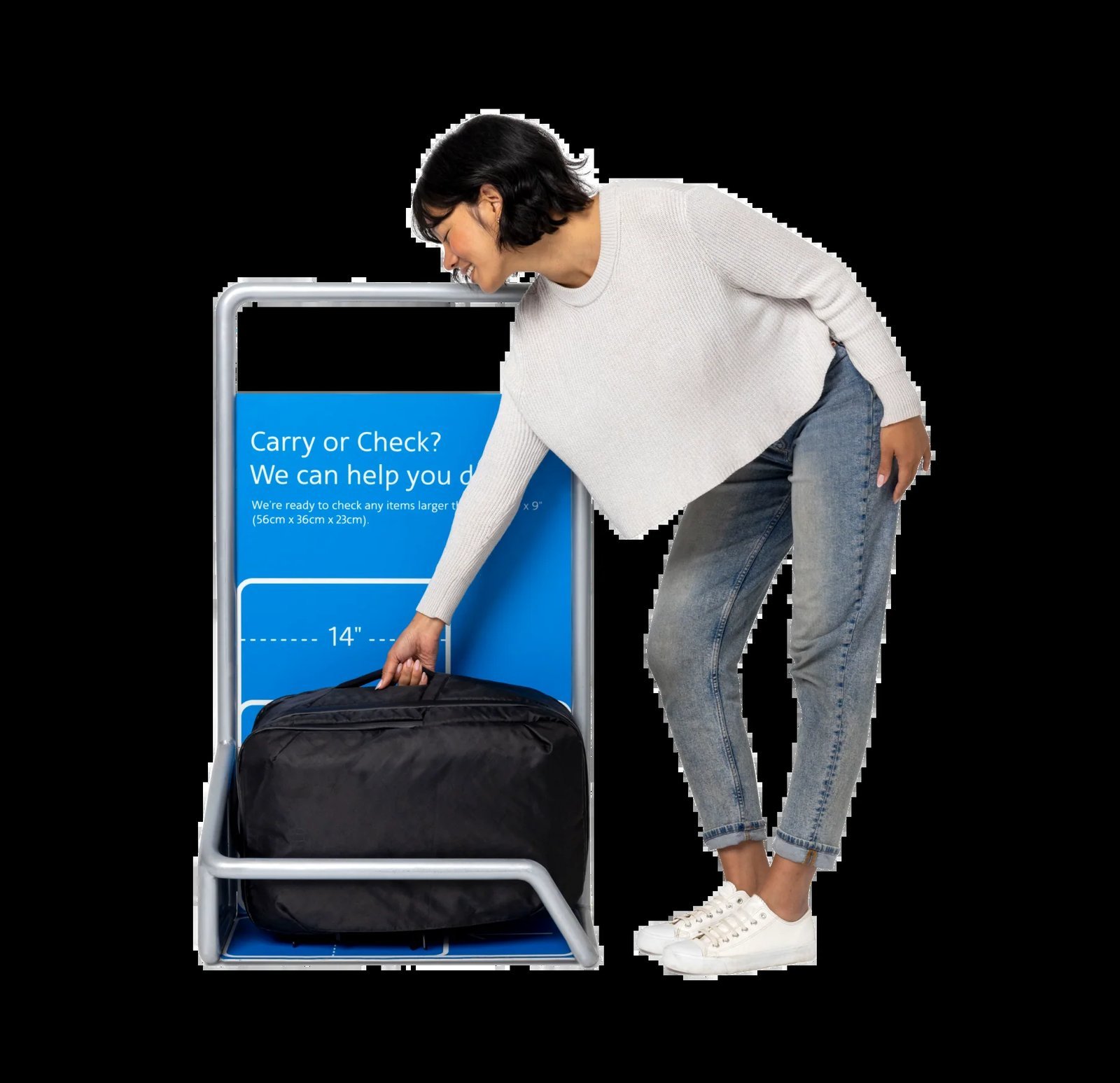
You can confirm your bag is ready for boarding by using the metal sizer bins found near the boarding gate. A compliant backpack should slide into the bin without you needing to force it or squash the contents. If the bag sticks out at the top, the bin lid won’t close, and the gate agent may require you to check it. If the signs are unclear or you’re unsure, look for the official baggage dimension diagram on your airline’s mobile app. This digital tool is the final authority for your specific flight and aircraft type.
Common Backpacking Mistakes
- Overstuffing the front pockets: This creates a bulge that makes the bag exceed the depth limit, even if the frame fits the sizer. Keep the front of your bag as flat as possible to ensure it slides into the bin easily.
- Ignoring personal item limits: Packing a second large backpack as a personal item often leads to extra fees because it won’t fit under the seat. Use a dedicated small daypack or a messenger bag for your under-seat items.
- Leaving loose straps dangling: Long straps can get caught in the conveyor belts or the overhead bin mechanism, which risks damaging your bag. Tuck all loose ends into the compression clips or use tape to secure them before you reach the gate.
Is it safe to bring a hiking backpack with a metal frame?
Yes, you can bring a hiking backpack with a metal frame as long as the total dimensions don’t exceed the airline’s carry-on limits. However, ensure the frame doesn’t have sharp, exposed edges that could scratch other passengers’ luggage or the interior of the overhead bin.
How long does it take to get through security with a backpack?
It usually takes 10 to 20 minutes to clear security, provided your backpack is organized for quick inspection. Keep your laptop and liquids in an easily accessible pocket so you can remove them quickly if the security officers require a separate scan of your electronics.
What happens if my bag is slightly too big?
If your bag is slightly too big, the airline may force you to check it at the gate, which often costs more than paying for a checked bag in advance. If the flight is full, gate agents become much stricter about enforcing size limits to ensure everyone has overhead space.
Can I bring two backpacks on a plane?
Yes, you can bring two backpacks if one is your carry-on and the other qualifies as your personal item. The personal item must be small enough to fit entirely under the seat in front of you, while the carry-on goes in the overhead bin.
How much weight can a carry-on backpack hold?
Most airlines limit carry-on bags to between 15 and 22 pounds, though this varies by carrier and fare class. Always check your specific ticket, as budget airlines frequently have lower weight caps than full-service carriers to account for smaller regional aircraft bins.
Are there restrictions on what I can pack in my backpack?
Yes, you must follow standard TSA rules, such as the 3.4-ounce limit for liquids and the prohibition of sharp objects like knives or tools. Check the prohibited items list on the government website to ensure your gear doesn’t cause delays or get confiscated at the security checkpoint.
Travelers who prioritize a flexible, soft-sided bag often find it easier to navigate these rules. Choosing a pack designed for travel, rather than rugged wilderness hiking, helps you stay within the standard dimensions while keeping your belongings secure and organized during your trip.
Related guides