
Yes, you can generally bring both a backpack and a standard carry-on suitcase aboard most commercial flights, provided the backpack fits completely beneath the seat in front of you. Airlines classify the backpack as your personal item and the rolling suitcase as your overhead carry-on. However, strict size restrictions and specific ticket classes, like basic economy, can alter these allowances. Always verify your specific fare rules before heading to the airport. Budget carriers often enforce these rules more strictly than legacy airlines, using physical sizers at the departure gate to verify compliance.
Key Takeaways
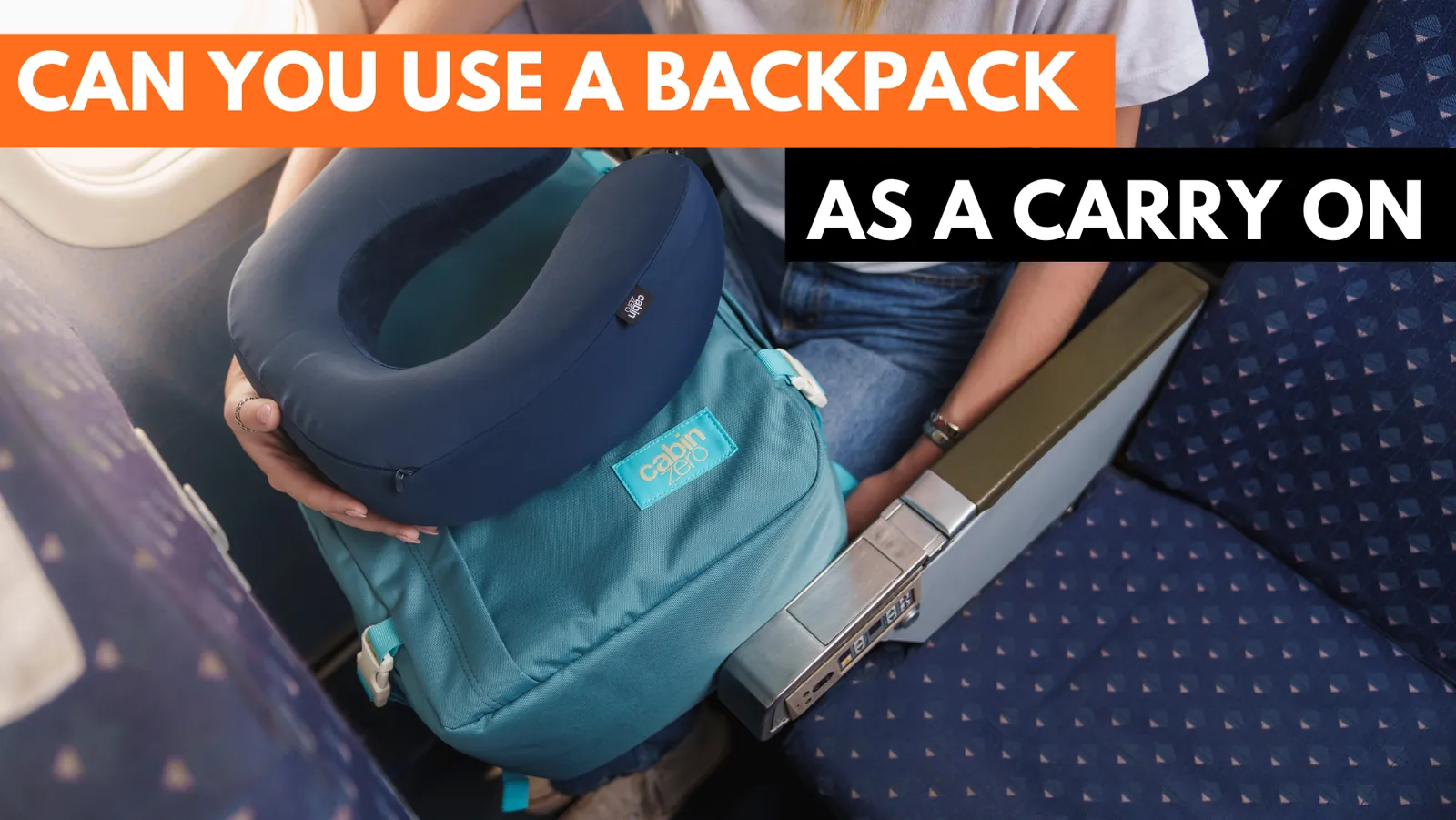
- Most major airlines permit one overhead carry-on bag and one smaller personal item.
- Your backpack must fit entirely under the seat to qualify as a personal item.
- Basic economy fares on certain carriers restrict you to only a single personal item.
- Always measure your loaded bags, including handles and wheels, before arriving at the gate.
- Budget airlines frequently use physical metal sizers at the departure gate to strictly enforce their specific baggage dimensions.
Taking a Backpack and Carry-On
When navigating airport security, understanding baggage allowances prevents unexpected gate fees. Most full-service carriers permit two pieces of cabin luggage. The larger piece goes in the overhead bin, while the smaller piece stays at your feet.
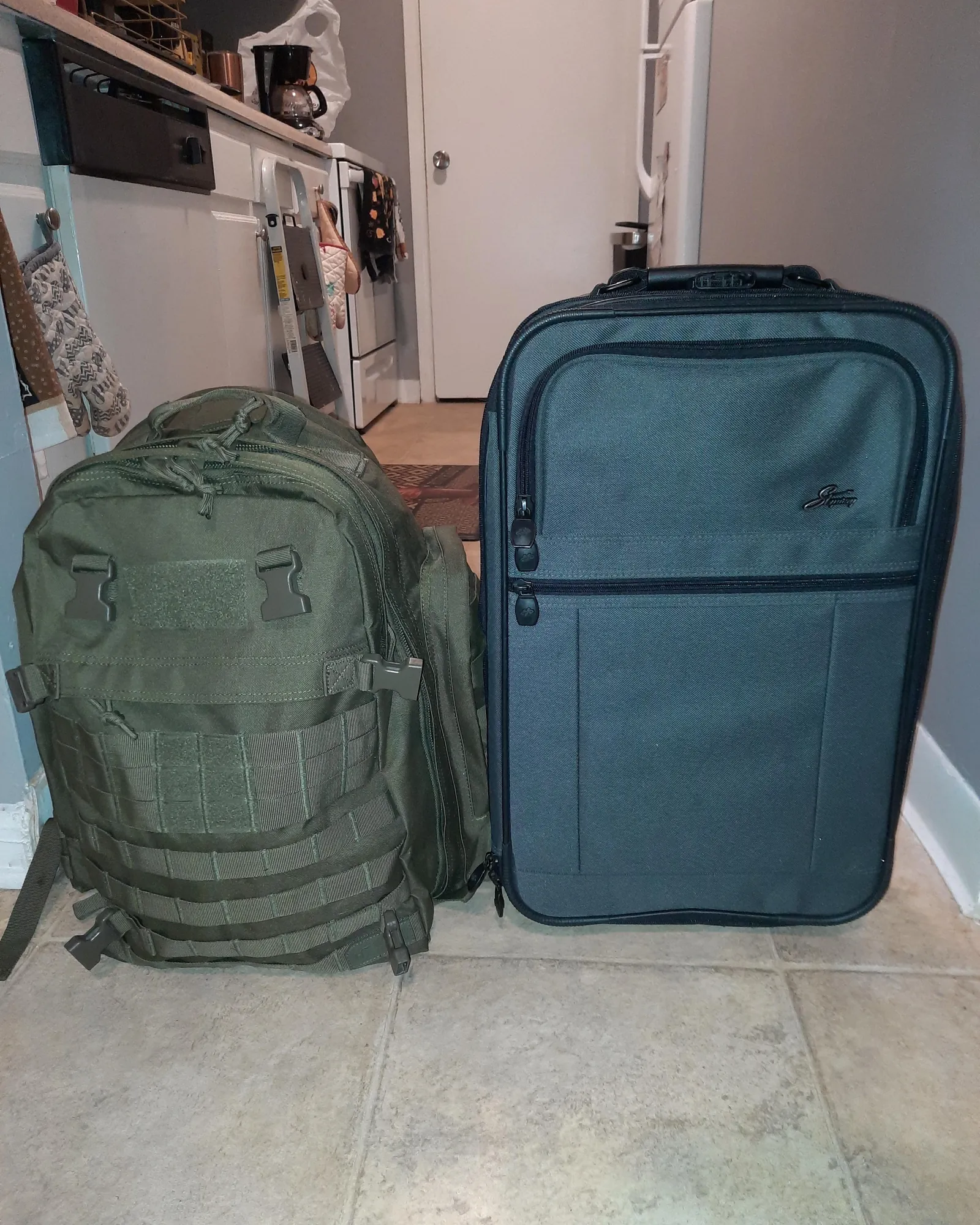
If your backpack is massive, like a multi-day hiking pack, it will count as your primary carry-on, meaning you can’t bring an additional rolling suitcase. Always check the linear dimensions of your specific bags. Travelers flying on budget carriers should be especially vigilant, as these airlines generate significant revenue from baggage infractions.
What Counts as a Personal Item
A personal item must be small enough to slide under the seat. Common examples include small daypacks, laptop bags, and purses. If you bring a large hiking backpack, it won’t qualify.
Pro Tip: Measure your backpack when it’s fully stuffed, as an empty bag might pass the sizer but a packed one will bulge and get rejected at the gate. Diaper bags and medical equipment are often exempt from this limit, but you must declare them to the gate agent before boarding.
Standard Carry-On Baggage Dimensions
While rules vary, the standard domestic carry-on size is typically twenty-two by fourteen by nine inches. This measurement must include the wheels and handles. International carriers often enforce slightly smaller limits. If your rolling suitcase exceeds these size limits, gate agents will force you to check it, often charging a hefty fee.
Always measure your bag at home using a tape measure rather than guessing. Soft-sided duffel bags can sometimes be squeezed into the sizer, but hard-shell suitcases offer zero flexibility if they exceed the maximum allowed measurements.
Do Basic Economy Tickets Allow Both
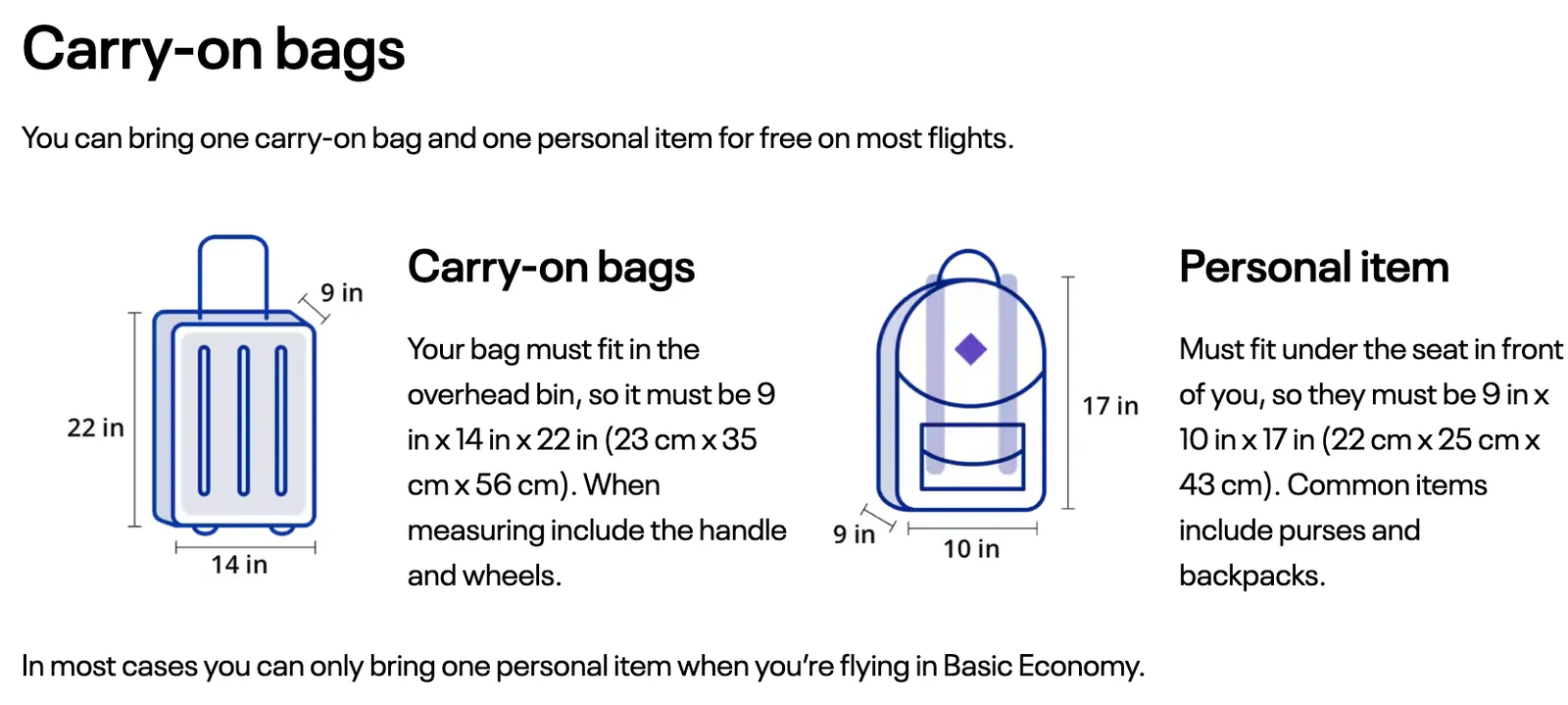
This depends entirely on the airline. Carriers like Delta Air Lines still allow a full carry-on and a personal item for basic economy passengers. However, United Airlines and JetBlue restrict basic economy travelers to just one personal item.
Warning: If you bring a rolling suitcase on these restricted fares, you’ll pay a standard checked bag fee plus a steep gate handling charge. Always read your ticket confirmation carefully. Families traveling with young children might receive an exception, but solo travelers will face strict enforcement of these restrictive ticket conditions.
Major Airline Size Limits Compared
Review the specific cabin baggage allowances for the most popular domestic carriers below to plan your packing strategy effectively.
| Airline | Carry-On Dimensions | Personal Item Dimensions | Basic Economy Carry-On |
|---|---|---|---|
| Delta Air Lines | 22 x 14 x 9 in | Fits under seat | Allowed |
| United Airlines | 22 x 14 x 9 in | 17 x 10 x 9 in | Not allowed |
| American Airlines | 22 x 14 x 9 in | 18 x 14 x 8 in | Allowed |
| JetBlue Airways | 22 x 14 x 9 in | 17 x 13 x 8 in | Not allowed |
| Southwest Airlines | 24 x 16 x 10 in | 18.5 x 8.5 x 13.5 in | Allowed |
How to Pack Both Bags
To maximize space, put heavy electronics and liquids in your overhead bag. Remember that the TSA carry-on liquid rules require all fluids in containers of 3.4 ounces or less, placed in a single quart-sized bag. Keep essential documents, medications, and a light jacket in your underseat backpack. This ensures you can access crucial items without standing up during the flight. Wearing your bulkiest jacket and heaviest shoes during boarding also frees up valuable interior volume inside your primary luggage.
What if Your Bags are Oversized
If your bags exceed the limits, gate agents will tag them for the cargo hold. You’ll likely pay an oversize fee or a standard checked baggage rate.
| Infraction Type | Typical Gate Fee | Result |
|---|---|---|
| Overweight carry-on | $30 to $50 | Checked to destination |
| Oversized personal item | $30 to $50 | Checked to destination |
| Extra carry-on bag | $30 to $65 | Checked to destination |
To avoid forced checking, board as early as possible to secure bin space near your assigned seat. If you’re flying on a fully booked flight, volunteer to gate-check your bag for free before the agent forces you to pay.
Best Backpacks for Underseat Storage
Choosing the right gear ensures compliance. Here are concrete models designed specifically to maximize underseat space without violating airline rules:
- Osprey Daylite Plus: A compact, twenty-liter daypack that easily compresses to fit under most airplane seats.
- Aer City Pack Pro: A sleek, structured urban backpack with a dedicated laptop compartment and luggage pass-through.
- Patagonia Black Hole 25L: A durable, weather-resistant option that squishes down perfectly when not completely full.
- Tortuga Setout Laptop Backpack: Designed specifically for travel, featuring clamshell opening and exact personal item dimensions.
- Cotopaxi Allpa 28L: A highly organized, clamshell-opening travel pack that fits perfectly in the overhead bin but might be too large for underseat storage.
Related guides
- Can You Take a Carry On Bag and a Backpack? Airline Rules
- Can I Take Carry On and Backpack? Airline Rules Explained
- Can I Take a Backpack and Carry on Luggage: Airline Rules
Frequently Asked Questions
Can I bring a backpack and a purse?
Yes, if your airline allows a carry-on and a personal item, you can bring a rolling suitcase, a backpack, and a purse. However, either the backpack or the purse must be stored inside the other bag or the carry-on to maintain the two-item limit.
Does a laptop bag count as a personal item?
Yes, a laptop bag counts as your personal item. If you also have a backpack, you must consolidate them. You can’t bring a rolling suitcase, a backpack, and a separate laptop bag onto the plane as three distinct items.
What happens if my personal item is too big?
If your personal item doesn’t fit under the seat, the gate agent will require you to check it. You’ll be charged a standard checked baggage fee plus an additional gate handling penalty, which often exceeds thirty dollars.
Can I take a hiking backpack as a carry-on?
A hiking backpack can serve as your primary carry-on if it meets the airline’s overhead bin dimensions. However, you won’t be allowed to bring an additional rolling suitcase. Ensure all loose straps are tucked away to prevent snags.
Do international flights have different carry-on rules?
Yes, international carriers often enforce stricter weight limits for cabin baggage, sometimes capping combined weight at fifteen pounds. Always check your specific international airline’s website, as their dimensional and weight restrictions frequently differ from domestic United States carriers.
Conclusion
Before your next trip, measure your fully packed backpack and rolling suitcase with a tape measure to ensure they meet your specific airline’s requirements. If your bags are too large, repack your belongings into smaller, compliant luggage to avoid expensive and frustrating gate-check fees on the day of your flight.