
Yes, you’re allowed to bring both items on most airlines, because whether you can take a carry-on bag and a backpack is a standard question for most travelers.
Can you take a backpack and carry-on
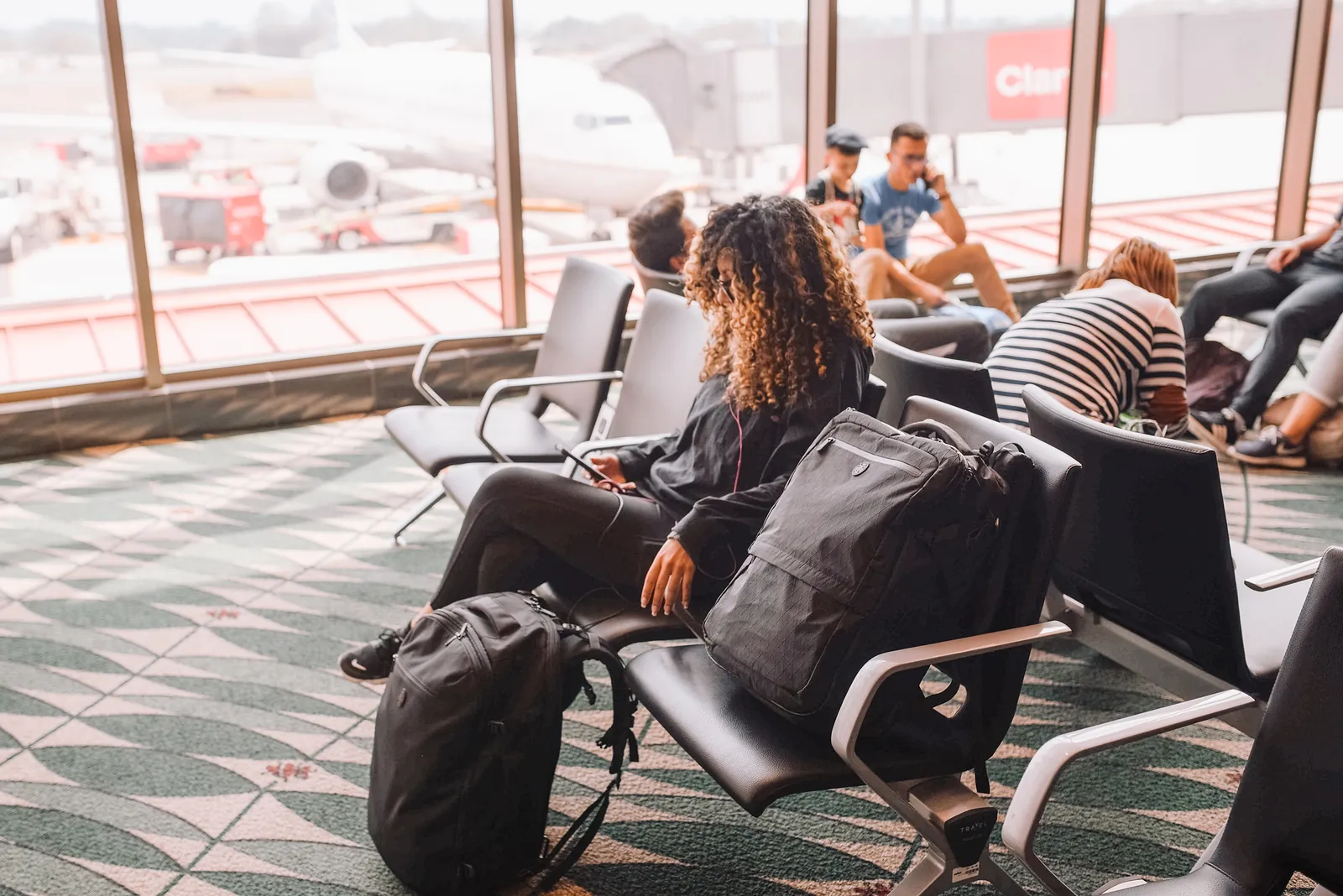
Most major carriers follow the same basic logic for cabin baggage. You usually get one larger piece for the overhead bin and one smaller piece that must fit under the seat in front of you.
| Airline type | Personal item limit | Overhead bag limit |
|---|---|---|
| Major carriers | 18 x 14 x 8 inches | 22 x 14 x 9 inches |
| Budget carriers | 17 x 13 x 8 inches | 22 x 14 x 9 inches |
| Regional jets | 17 x 10 x 8 inches | 20 x 14 x 9 inches |
| International long-haul | 17 x 13 x 9 inches | 22 x 14 x 9 inches |
| Basic economy | 17 x 10 x 8 inches | Fee may apply |
How your ticket type changes the rules
Your fare class determines your allowance. Standard economy includes two bags, while basic economy often restricts you to one.
Always check your Transportation Security Administration carry-on guidelines to ensure your items are permitted through the checkpoint. The total weight allowed for both bags combined often caps at 22 pounds for international flights, though this varies by airline. If you’re flying on a small regional plane, the overhead bins might be too small for standard carry-ons. Oversized or overweight bags incur gate-check or excess baggage fees.
Steps for packing two bags
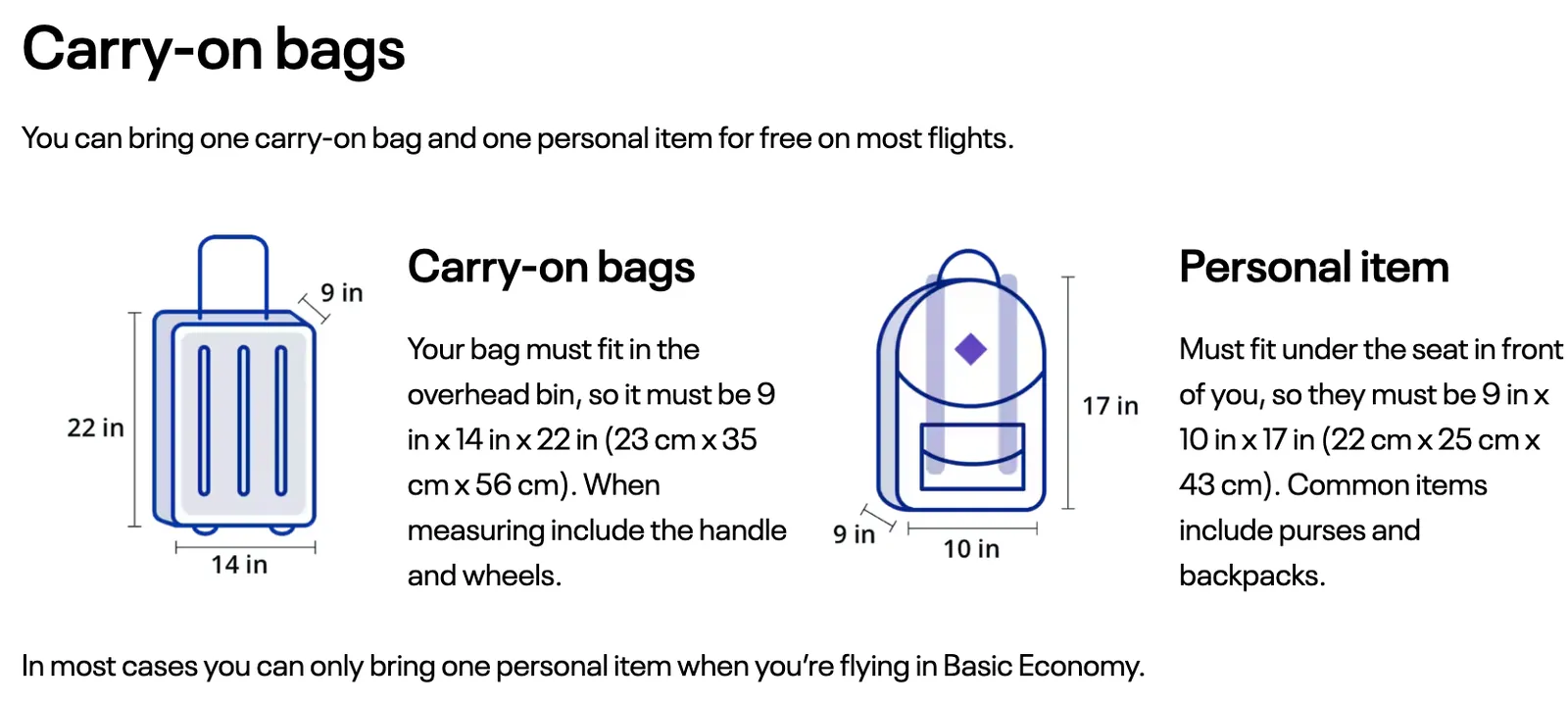
- Measure your backpack to ensure it stays under 17 inches in height so it fits easily under the seat.
- Pack heavy items in your larger carry-on bag to keep the backpack light and easy to carry through the terminal.
- Organize your documents in the outer pocket of your backpack so you can access your passport and boarding pass quickly.
- Confirm your airline’s specific dimensions by visiting their official website, as limits change based on the aircraft model you’re flying.
- Attach your backpack to the handle of your carry-on roller bag using a luggage strap to keep your hands free while walking.
The common mistake with bag sizes
Travelers often confuse overhead bags with personal items. This leads to last-minute gate-check fees. Always verify that your backpack fits the personal item dimensions provided in your booking confirmation to avoid these extra costs.
When to seek help at the airport
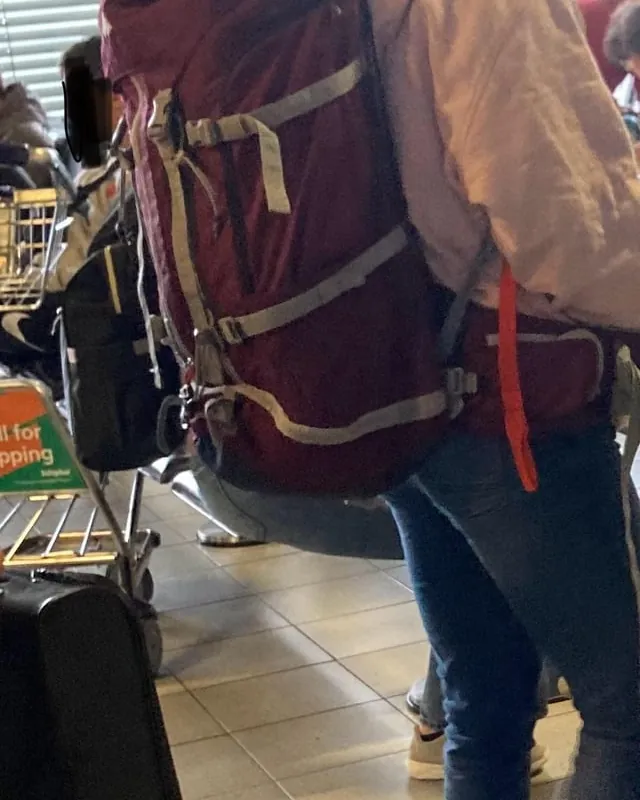
- Bag exceeds dimensions: If your bag is clearly larger than the airline’s sizing bin, speak to a gate agent early.
- Medical equipment: If you’re carrying specialized medical devices, contact the airline’s disability assistance desk before your flight.
- Prohibited items: If you have accidentally packed restricted items, ask a security officer for guidance before entering the screening area.
Frequently asked questions
Can I bring a laptop bag and a backpack?
Yes, you can bring both, provided one counts as your personal item and the other as your carry-on bag. Most airlines allow one of each, but check your specific ticket class.
Is it safe to put my backpack in the overhead bin?
Yes, it’s safe, but only if there’s enough space left after everyone has boarded. If the bin is full, the flight crew may ask you to move it under your seat.
How long does it take to clear security with two bags?
It usually takes 15 to 30 minutes to clear security, but this depends on the volume of passengers. Two bags don’t change your screening time if they’re organized properly.
What happens if my backpack is too big?
If your backpack is too big, the airline will treat it as a carry-on bag. If you already have a carry-on, you’ll be forced to check one of the two bags.
Does it matter if I am flying a budget airline?
Yes, budget airlines often have stricter rules for basic economy tickets. You might be limited to only one personal item, and any additional bag will incur a significant extra fee.
How many liters should my backpack be?
A backpack between 20 and 25 liters is the ideal size to fit under an airline seat. Anything larger than 30 liters often exceeds the standard personal item size limits.
Conclusion
Start by measuring your backpack and carry-on against the specific limits listed on your boarding pass. If both bags fit within these constraints, you can proceed to the gate with confidence. If one bag clearly exceeds the size, check it at the counter to avoid gate fees.