
Yes, you can bring a backpack as a carry-on on almost every commercial airline. Depending on its physical dimensions and how fully you pack it, your bag will classify either as a primary overhead carry-on or as a smaller personal item that sits beneath the seat in front of you.
Key Takeaways
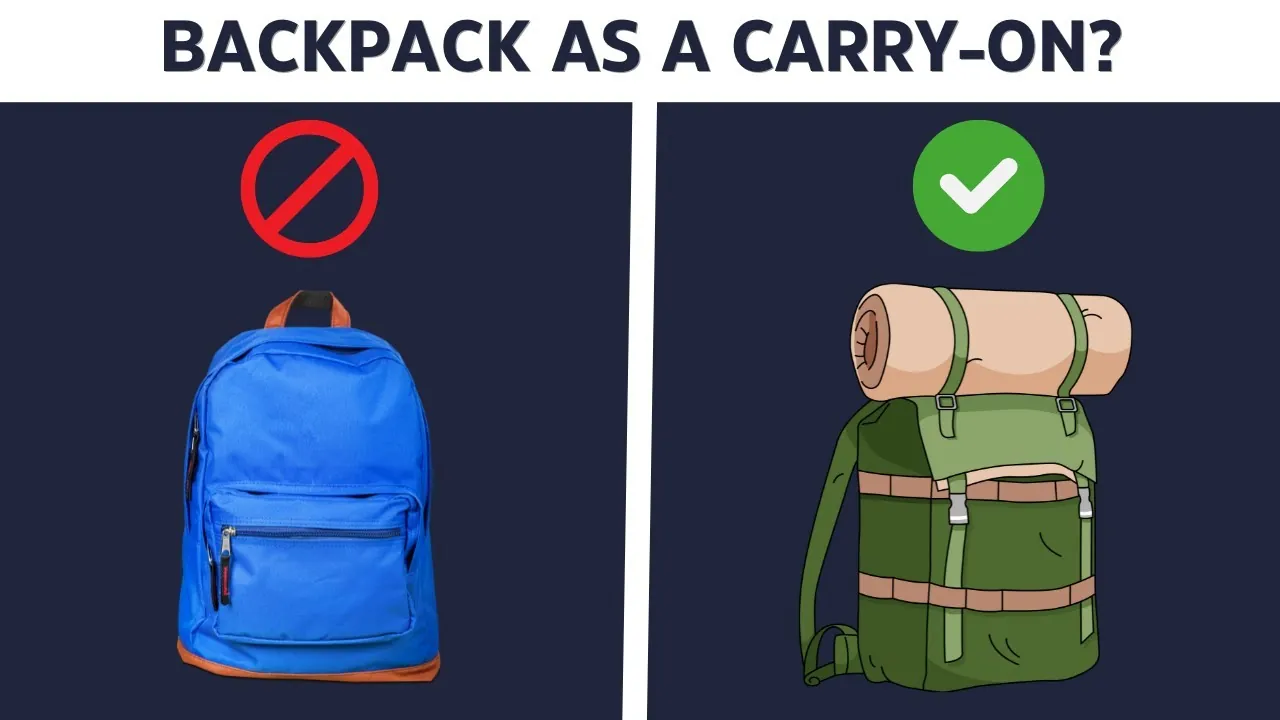
- Backpacks under 40–45 liters generally fit the standard overhead bin requirements.
- Daypacks under 20–25 liters qualify as personal items if they stow under the seat.
- Domestic US legacy carriers permit one carry-on bag plus one personal item for free.
- Budget airlines often charge extra for overhead access and only include a personal item.
- Measuring your bag while fully packed prevents surprise gate-check luggage fees.
Backpack Carry-On vs. Personal Item Rules
Airlines divide cabin baggage into two distinct tiers: carry-on bags and personal items. A primary carry-on goes into the overhead bin, while a personal item must fit entirely underneath the passenger seat directly ahead of you.
Pro Tip: Pack soft-sided bags without rigid internal frames so you can compress the fabric into airline sizer boxes at the boarding gate.
Airline Carry-On Size Limits
Most US airlines enforce a 22 x 14 x 9-inch overhead limit.
| Airline | Overhead Carry-On Size Limit | Typical Personal Item Limit | Basic Economy Allowance |
|---|---|---|---|
| Delta Air Lines | 22 x 14 x 9 in (56 x 35 x 23 cm) | Must fit under seat | Carry-on + personal item |
| American Airlines | 22 x 14 x 9 in (56 x 35 x 23 cm) | 18 x 14 x 8 in (45 x 35 x 20 cm) | Carry-on + personal item |
| United Airlines | 22 x 14 x 9 in (56 x 35 x 23 cm) | 17 x 10 x 9 in (43 x 25 x 22 cm) | Personal item only |
| Southwest Airlines | 24 x 16 x 10 in (61 x 41 x 25 cm) | 18.5 x 13.5 x 8.5 in (47 x 34 x 22 cm) | Carry-on + personal item |
| Spirit Airlines | 22 x 18 x 10 in (56 x 46 x 25 cm) | 18 x 14 x 8 in (45 x 35 x 20 cm) | Personal item only (overhead fee) |
| Frontier Airlines | 24 x 16 x 10 in (61 x 41 x 25 cm) | 18 x 14 x 8 in (45 x 35 x 20 cm) | Personal item only (overhead fee) |
Choosing the Best Backpack Volume
Backpack volume is measured in liters, which dictates external dimensions. Choosing the correct capacity ensures your gear meets strict size limits without surrendering interior packing room.
| Capacity Range | Bag Classification | Typical Use Case | Overhead or Under-Seat |
|---|---|---|---|
| 15 to 25 Liters | Personal Item | Commuter, daypack, laptop carry | Fits under front seat |
| 28 to 35 Liters | Mid-size Carry-On | Weekend trips, minimal travel | Overhead bin (tight under-seat) |
| 40 to 45 Liters | Max-size Carry-On | Multi-week trips, one-bag travel | Overhead bin only |
| 50+ Liters | Checked Luggage | Trekking, backcountry expeditions | Must be checked at counter |
Bags Under 25 Liters
Compact daypacks like the Fjallraven Kanken or The North Face Jester make ideal personal items.
Bags Between 35 and 45 Liters
Travel-specific designs like the Osprey Farpoint 40 or Peak Design Travel Backpack 45L maximize the standard overhead space. They feature stowable harness straps that prevent dangling webbing from snagging inside aircraft bins.
Packing a Backpack for TSA Security
Navigating the security checkpoint requires rapid access to specific gear inside your bag.
Keep your TSA-compliant liquids (containers 3.4 ounces or smaller inside one clear quart-size bag) packed in an exterior zippered pocket. Place heavy items like shoes or dense tech pouches at the bottom center of the pack to stabilize the load while walking through terminals.
Warning: External water bottles must be empty before entering the security queue, or agents will pull your bag for manual inspection.
Can Hiking Packs Be Carry-Ons?
Trekking packs are often difficult to use as cabin luggage. Internal stays often push hiking packs beyond the 22-inch limit.
- Sternum straps and hip belts snag on seats, armrests, and overhead latch mechanisms during boarding.
- Trekking poles are explicitly banned from passenger cabins by federal security screeners.
- External compression webbing must be cinched down tightly to flatten protruding sleeping-pad loops.
- Top-loading lids lack the clamshell openings required for neat overhead bin alignment.
How to Avoid Gate-Check Fees
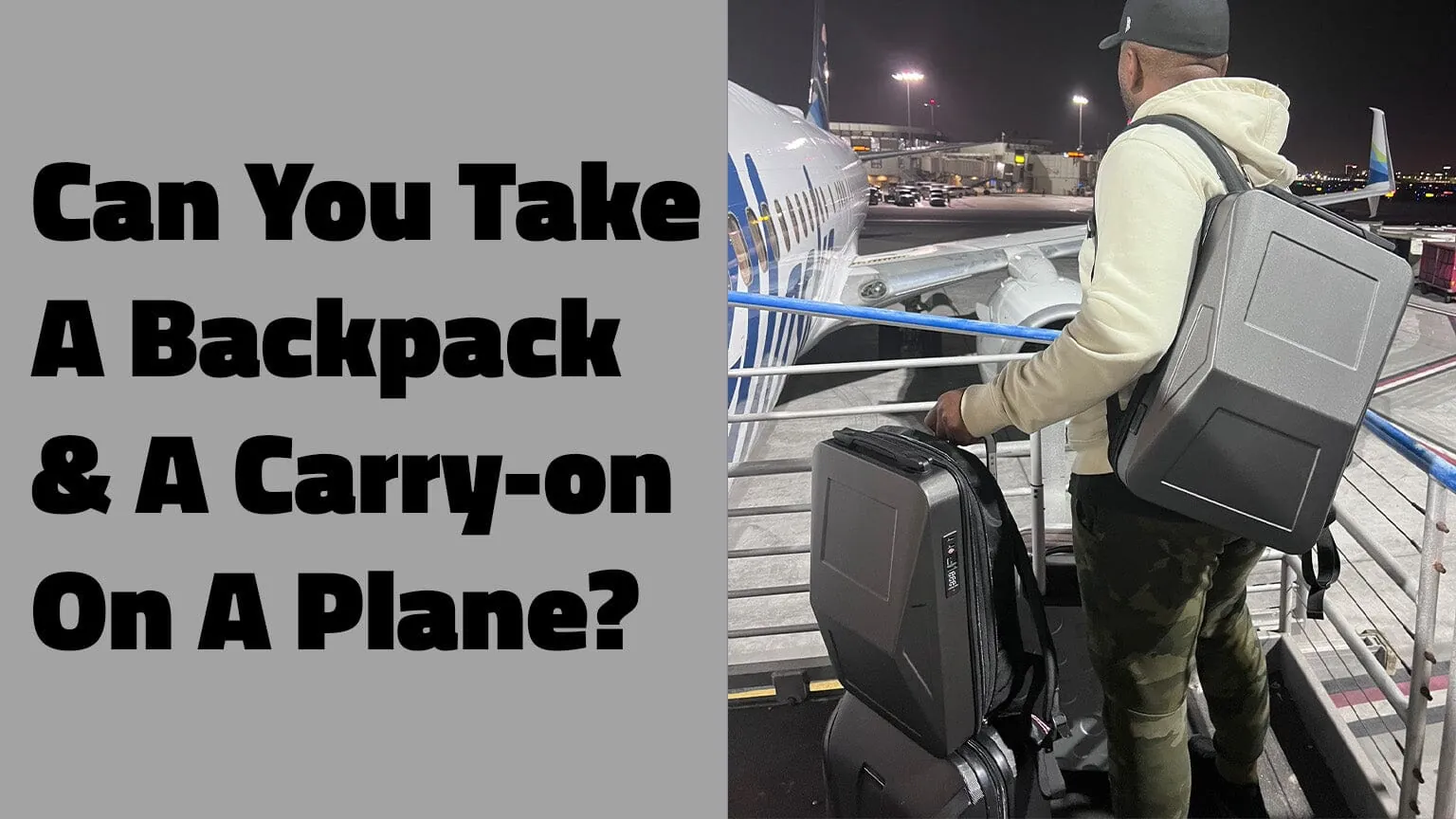
Ultra-low-cost carriers inspect bags aggressively at the departure gate. If your bag exceeds the metal sizing frame, agents will charge $50 to $99 to check it.
- Tighten exterior straps: Pull every compression strap until the fabric compresses your clothing completely flat.
- Wear your heavy gear: Don your bulkiest jacket and heaviest boots onto the aircraft instead of packing them.
- Empty secondary quick-stash pouches: Shift charging cables, sunglasses, and snacks into your jacket pockets to shave depth off your backpack profile.
- Carry by the top handle: Carrying your bag by its briefcase grab-handle rather than wearing both shoulder straps makes the bag appear visibly smaller to airline boarding staff.
Related guides
- Can I Have a Carry on Bag and a Backpack: Airline Rules
- Can I Travel With a Carry On and Backpack: Airline Rules
- Can I Bring a Carry on Bag and a Backpack? Airline Rules
Frequently Asked Questions
Will airlines measure my backpack at the gate?
Legacy carriers rarely measure soft backpacks unless they look visibly overstuffed or tall. However, ultra-low-cost carriers like Frontier, Spirit, and Allegiant routinely require passengers to place personal backpacks into metal sizing boxes before scanning boarding passes.
Does a backpack count as a personal item?
Yes, a backpack counts as an approved personal item as long as its physical dimensions slide completely underneath the seat directly in front of you. Bags between 15 and 25 liters universally fit these dimensions, while stiff bags larger than 30 liters usually fail under-seat clearance tests.
Can I carry a backpack and a rolling suitcase?
Yes, on standard ticket classes across major airlines like Delta, United, and American. The rolling suitcase serves as your primary overhead carry-on, while the backpack serves as your secondary personal item.
Are 40L backpacks allowed on airplanes?
A 40-liter backpack is generally the absolute maximum capacity permitted as a standard overhead carry-on. Models purpose-built for air travel generally match standard 22 x 14 x 9-inch limits. However, if you overfill the exterior pockets or fail to compress internal contents, the bag will expand beyond allowable depth rules and require checked handling.
What items are banned inside a carry-on backpack?
Carry-on packs can’t contain liquid containers exceeding 3.4 ounces (100ml), pocket knives, razor blades, power tools, or hiking trekking poles. Furthermore, lithium power banks and electronic cigarette batteries can’t travel in cargo holds and must stay packed exclusively inside your carry-on luggage throughout the flight to mitigate accidental thermal runaway risks.
Conclusion
Before you head to the airport, check your specific airline’s website for their latest size requirements. It’s a smart move to measure your bag at home so you don’t run into any surprises at the gate. You’ll feel much more relaxed once you’re certain everything fits just right for your trip.