
Yes, but only small ones. Determining if you can bring a backpacking backpack as carry-on comes down to physical bag height: standard airlines cap carry-on length at 22 inches (56 cm). If your internal frame stands taller than that, gate staff will force you to check it. Measure your empty pack’s rigid back panel with a tape measure before packing a single item.
Can you bring your backpacking backpack onboard
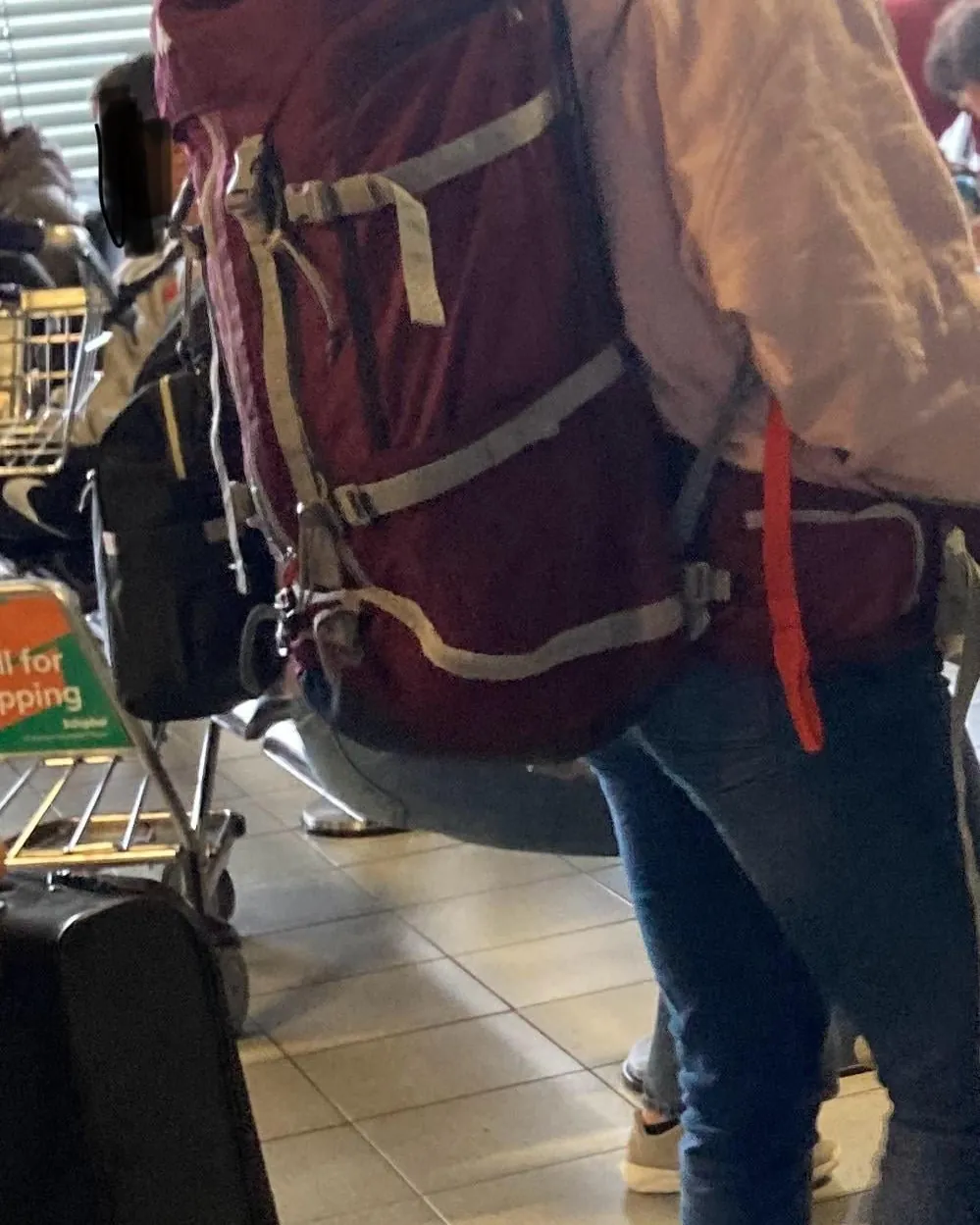
Most major US airlines allow carry-on bags up to 22 x 14 x 9 inches (56 x 36 x 23 cm). Weekend trail packs fit easily, but long-distance expedition packs almost always fail because their metal or plastic stays can’t compress.
The exact cutoff depends on pack volume and frame design. The table below shows what to expect at the airport gate across typical bag sizes:
| Your situation | Answer | Why |
|---|---|---|
| Pack is 35 liters or smaller | Yes | Fits inside standard 22-inch sizers |
| Pack is 40 to 45 liters | Usually | Fits only if not overstuffed |
| Pack is 50 liters or larger | No | Internal stays exceed 22 inches |
| Frameless pack of any volume | Yes | Soft fabric squishes into sizer boxes |
| Traveling on regional propeller flight | Usually not | Overhead bins are narrower than jets |
| Budget European airline like Ryanair | Rarely | Stricter 21.6-inch or personal-item limits |
Frame height limits the overhead bin
Rigid frame stays are the single factor that decides carry-on status. Clothing and sleeping bags compress under hand pressure, but internal aluminum stays or perimeter wire frames don’t bend. If that metal rod measures 24 inches, the pack will stick out of the bin and prevent the overhead door from latching shut.
Airlines care about physical box dimensions rather than pack capacity numbers. A soft 50-liter frameless bag rolled halfway down easily clears the gate check. Conversely, a rigid 40-liter mountaineering bag with non-removable frame stays will fail the airport sizer box.
You trade convenience for packing room when relying on carry-on limits. If the frame is under 22 inches, carry it on; otherwise, check it.
How to board with your trail pack
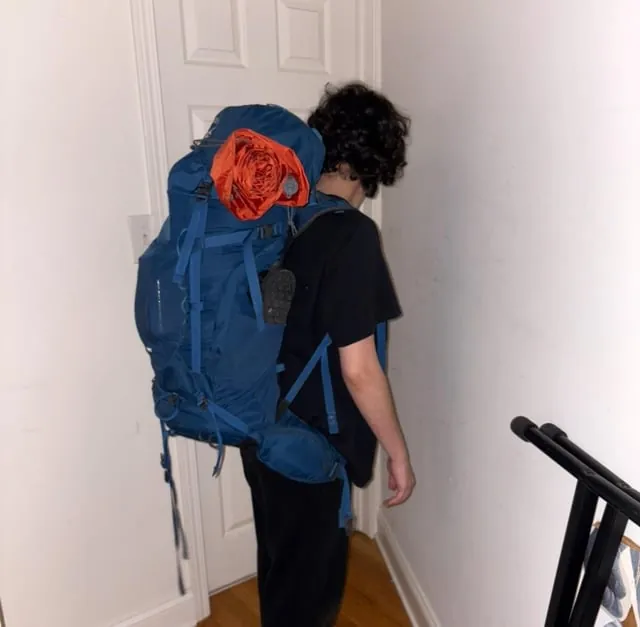
If your pack fits the 22-inch limit, follow these steps to clear security and board the plane without gate staff stopping you:
- Pull every compression strap tight to flatten the pack depth below 9 inches before walking toward the boarding gate. A flat profile looks like ordinary luggage to boarding agents.
- Remove all prohibited trail gear including tent stakes, trekking poles, and pocket knives. Security agencies like the TSA prohibited items list ban sharp outdoor tools and hiking poles from passenger cabins.
- Buckle the hip belt backward around the body of the pack so straps don’t dangle. Snug webbing prevents loose straps from catching on airplane aisle seats.
- Pack bulky layers at the base instead of the top lid extension. The bag top must stay completely flat to remain under the 22-inch length ceiling.
- Slide the bag wheels-first into the bin with the harness facing up toward the ceiling. The bin door shuts cleanly without snagging fabric or buckles.
Overfilling the top lid pocket
The most common mistake is cramming jackets, snacks, and electronics into the floating top lid. A pack that measures 21 inches at home easily swells to 26 inches when the top brain expands. Gate agents watch for vertical bulk as you walk down the jet bridge.
When your trail pack must be checked
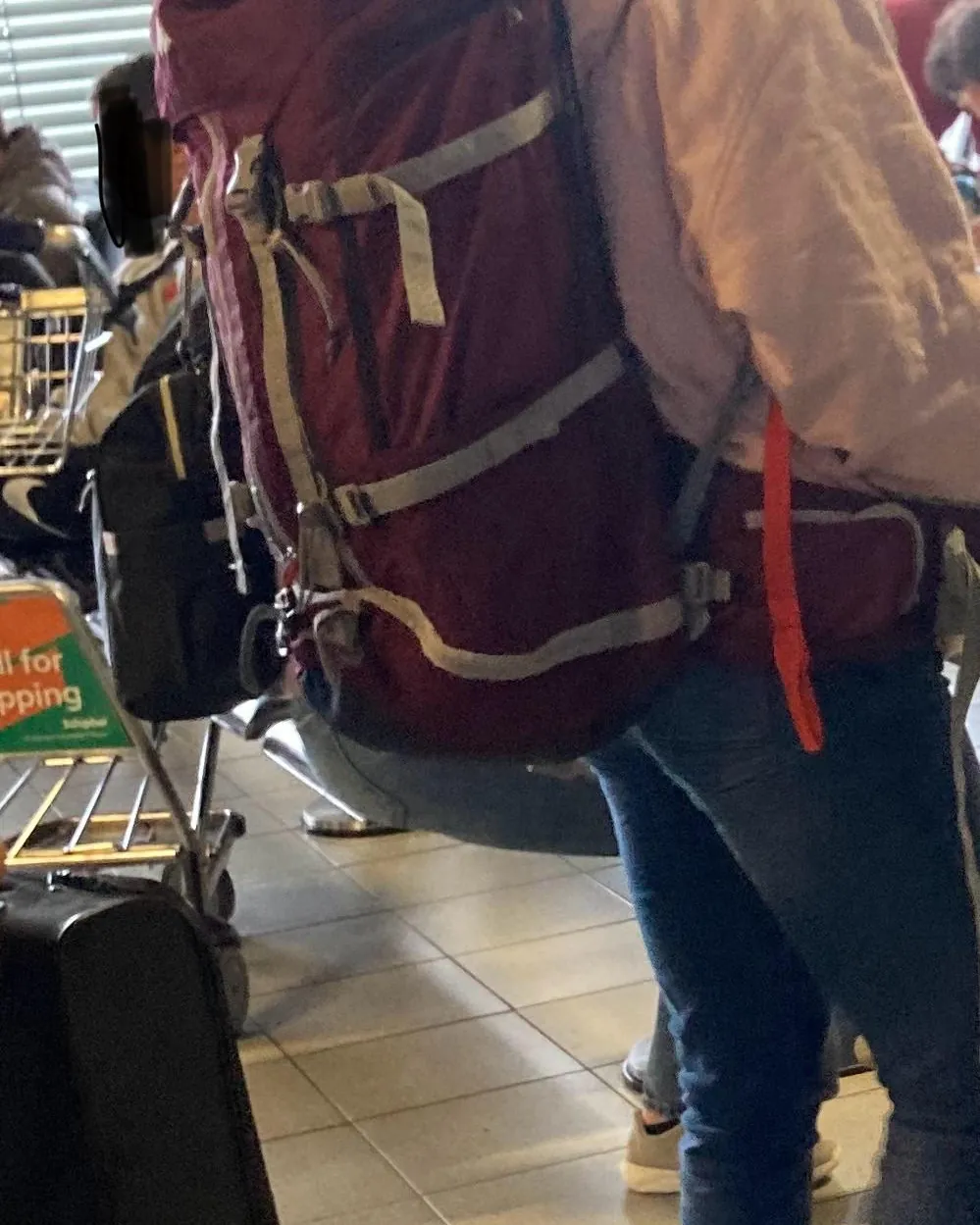
Certain outdoor configurations can’t legally or physically ride in a passenger airplane cabin. You must check the bag or reconfigure your equipment when you hit these hard boundaries:
- Trekking poles or tent spikes are packed inside: Airport screeners confiscate sharp metal spikes instantly at passenger security checkpoints.
- The rigid internal frame exceeds 22 inches: Airport gate agents will reject bags that can’t fit inside the metal sizing template.
- You’re carrying camping fuel canisters: Both full and empty pressurized fuel canisters are strictly banned from all passenger cabins.
If you must carry tent spikes or hiking poles, you can’t use carry-on baggage.
Frequently asked questions
Can trekking poles go in carry-on bags?
No. Security rules ban metal or carbon hiking poles from passenger aircraft cabins. You must remove the poles and put them in checked luggage, or buy cheap trekking poles when you reach your trail destination.
Does a 40L backpack count as a carry-on?
Yes, on most full-service domestic airlines. Most 40-liter packs measure between 21 and 22 inches tall when packed carefully. You must avoid overstuffing the top pocket so the total height doesn’t expand past 22 inches.
What happens if your backpack is too big for the carry-on sizer?
Gate agents will force you to gate-check the backpack right before boarding. On budget airlines, you must pay an added gate-check fee, and loose straps risk getting torn on conveyor belts.
How many liters can a carry-on backpack be?
40 to 45 liters is the maximum realistic volume for carry-on luggage. Anything larger requires longer internal metal support stays. Those longer frames permanently exceed the standard 22-inch vertical airline luggage bin limit.
Can you put a backpack under the seat in front of you?
Only if it is 30 liters or smaller. Most airlines restrict personal under-seat items to 18 x 14 x 8 inches. A trail pack with a rigid back frame will stick out into your leg space and block cabin evacuations.
Do airlines weigh carry-on backpacks?
Usually not in the United States, but common in Europe and Asia. Many international budget carriers strictly enforce an 8 kg (17.6 lb) or 10 kg (22 lb) carry-on weight ceiling right at the check-in desk or boarding line.
Measuring your hiking gear before departure
Measure the rigid back panel of your empty backpack with a ruler from base to top stay. If that hard frame measures 22 inches or less, pack your soft gear and board your flight with confidence. If rigid stays exceed 22 inches or you must carry metal tent stakes, stop attempting carry-on and book checked luggage.