
Whether a hiking bag can be a carry on depends entirely on its packed exterior measurements and internal frame stiffness. The one condition that flips this answer is an internal frame taller than 22 inches, which prevents the pack from fitting into the overhead bin. Measure your packed bag right now with a hard tape measure from the bottom base to the highest rigid point.
Is a hiking bag carry on friendly
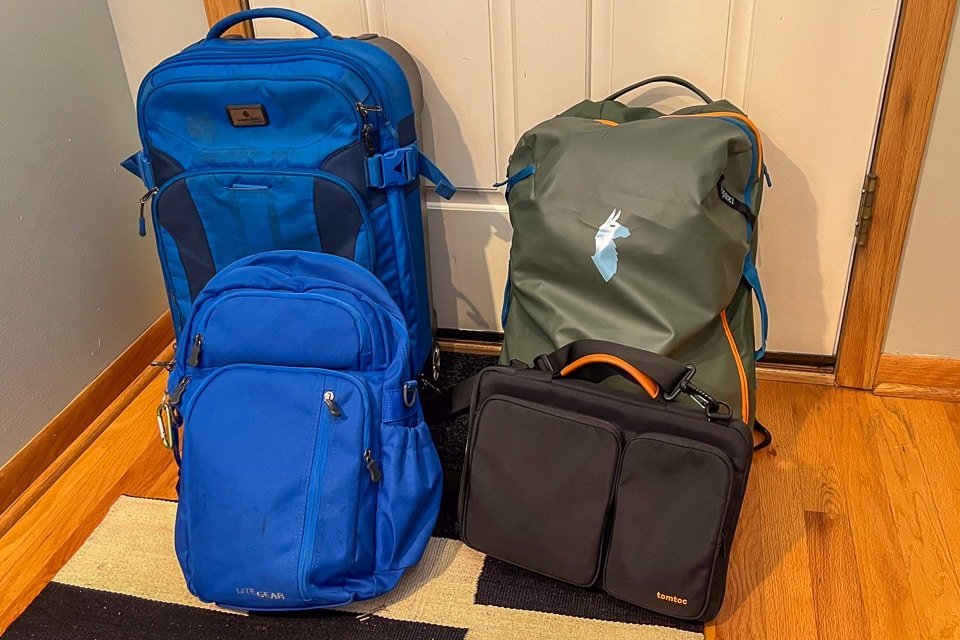
A hiking pack fits airline rules only when its packed body matches standard overhead bin sizes.
| Your situation | Answer | Why |
|---|---|---|
| Frameless pack under 40 liters | Yes | Fabric compresses into the airport sizer box |
| Internal frame pack over 50 liters | No | Rigid stays exceed the 22-inch height limit |
| Pack measuring exactly 22x14x9 inches | Yes | Matches standard domestic carry-on limits |
| Daypack under 25 liters | Yes | Slips easily under the front seat space |
| Hiking bag with attached trekking poles | No | Security rules ban poles in cabin bags |
| Bag packed past its seams | No | Bulging pockets fail the metal bin test |
What decides your backpack cabin approval
The physical frame length of your backpack decides whether an airline lets you carry it into the cabin. Soft fabric squishes down when you cinch the side straps, but aluminum stays and rigid plastic framesheets never bend. Major United States airlines enforce a standard carry-on limit of 22 x 14 x 9 inches (56 x 36 x 23 cm). Most hiking packs built for multi-day trips start at 24 to 28 inches tall so the hip belt sits correctly on your pelvis.
Airlines also limit what items go inside the cabin. Even if the bag fits the size box, gear like metal tent stakes and sharp tools can’t fly in carry-on luggage according to TSA baggage security rules. The trade-off is clear: you save time by skipping the luggage carousel, but you must leave your outdoor tools behind or buy them at your destination. This approach isn’t for alpine hikers who need ice axes or heavy hardware.
If your pack frame measures 22 inches or less, it works as a carry-on; if the rigid frame measures over 22 inches, you must check it.
How to prepare a hiking pack for flights
Taking a trail pack on an airplane works well when you pack the volume carefully. Use these practical steps to get your bag past the gate agent without issues.
- Remove rigid frame stays if they slide out of dedicated fabric sleeves, which lets the pack body compress down by several inches.
- Pack heavy items in the center so the bag doesn’t bulge outward past the 9-inch depth mark.
- Tighten all exterior compression straps until the bag becomes a dense, flat block that holds its shape.
- Buckle the hip belt backward around the pack body so loose clips don’t catch on seats or bins.
- Insert the bag into a luggage scale to confirm the weight stays below the 15 to 22-pound limit common on international carriers.
- Test the bag in a home box measuring 22 x 14 x 9 inches to ensure it drops inside without excessive force.
The strap snagging mistake at boarding
The biggest mistake travelers make is leaving loose harness straps, sternum clips, and hip belts dangling freely while boarding. Airport sizer bins and overhead compartment hinges catch loose webbing easily, which tears the technical fabric or breaks plastic buckles. Replacing a damaged hip belt or torn harness is inexpensive compared to the cost of a new bag, or it could ruin the pack entirely right before your trip starts. Always tuck your harness straps behind a dedicated rain cover or wrap the entire bag in an airline flight duffel before you reach the gate.
When a hiking pack needs checked baggage service
Some outdoor gear simply can’t travel in an overhead bin no matter how carefully you pack. Hand your bag to the ticket counter agent if your trip involves any of these gear situations:
- Poles or stakes included: Metal trekking poles and pointed tent stakes get confiscated immediately at passenger security checkpoints.
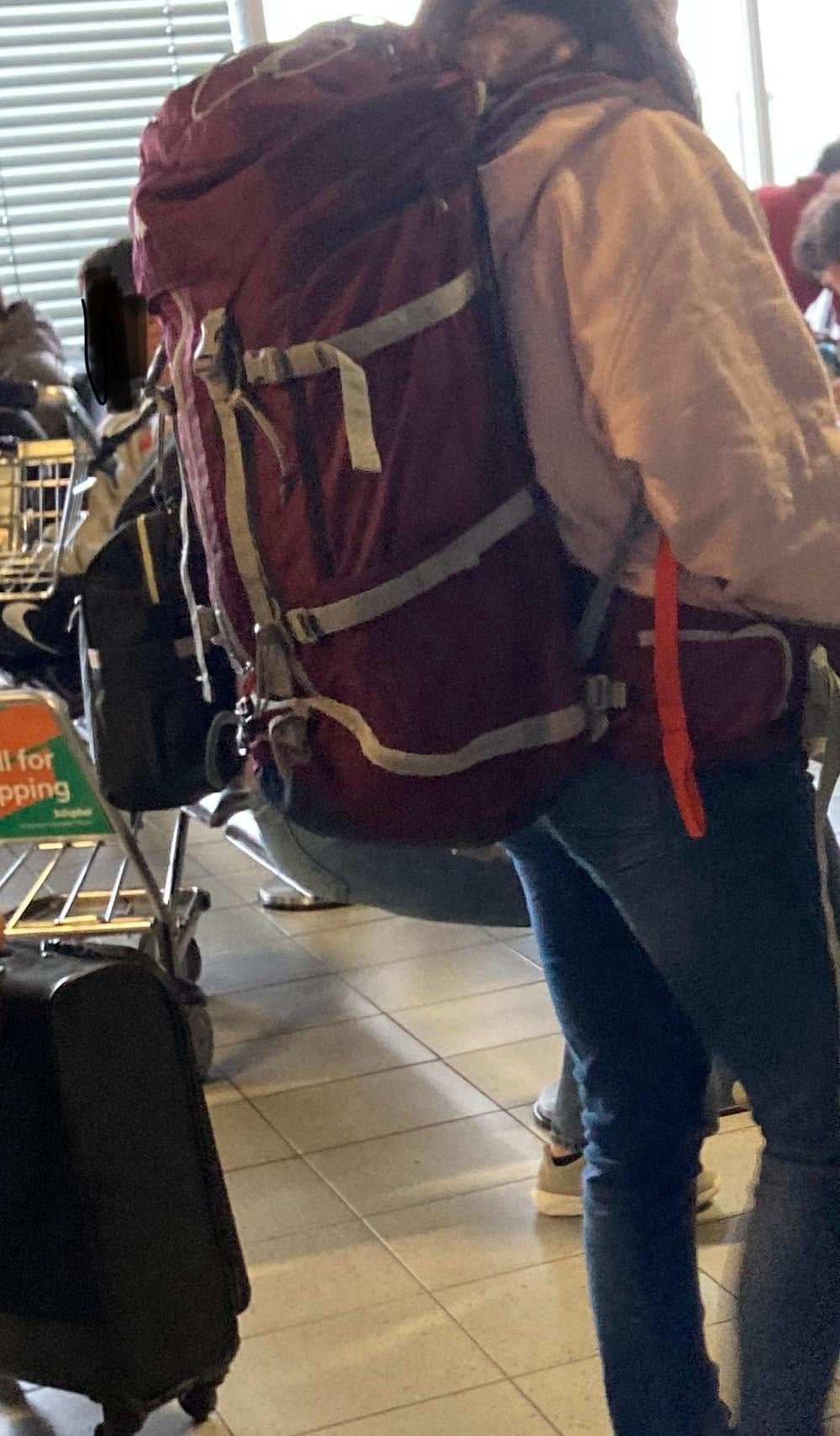
- Frame exceeds 24 inches: Long-distance packs with tall, non-removable stays won’t fit straight into airplane compartments.
- Liquid fuel bottles attached: Camp stove fuel bottles hold flammable odors that airline staff flag during visual cabin checks.
A customer service agent at the check-in desk handles oversize baggage drop-offs for items that exceed cabin dimensions.
Frequently asked questions
Can you bring hiking poles in a carry on bag?
No, security agencies prohibit hiking poles in the cabin because of sharp tips. You must put trekking poles inside checked luggage, or purchase cheap poles after you land at your destination airport.
How many liters can a carry on hiking bag be?
A 40-liter hiking bag is the maximum volume that reliably matches standard 22 x 14 x 9-inch carry-on limits. Packs rated at 45 liters or higher usually feature rigid frames that exceed typical airline height rules.
Does a hiking backpack count as a personal item?
No, a standard hiking backpack exceeds personal item size rules unless it’s an ultra-small 15 to 20-liter daypack. A personal item must fit entirely underneath the seat in front of you during flight.
Can an internal frame pack fit in an overhead bin?
Yes, but only if the internal aluminum stays measure 22 inches or shorter. Long-torso packs feature taller stays that force the overhead bin door to stay open, causing crew members to gate-check the bag.
What happens if your hiking pack is too big at the gate?
The airline gate agent will charge a gate-check fee and send your backpack to the airplane cargo hold. Loose straps on unprotected packs face high risk of mechanical damage on automated airport conveyor belts.
Is a 50L backpack too big for carry on?
Yes, a 50L pack almost always measures at least 26 inches tall, which is 4 inches over the carry-on limit. The rigid back system can’t compress down far enough to slide into standard airline sizing boxes.
Next steps for packing your hiking bag
Conclusion
Measure your empty pack frame length against your airline size rules right now using a tape measure. You should see a total height of 22 inches or less, which confirms the backpack fits the cabin overhead bins. If your pack frame measures taller than your carrier allowance, switch to a checked duffel immediately instead of risking gate-check fees.