
Yes, you can bring a hiking backpack as a carry-on, provided its dimensions fit within the specific airline’s overhead bin limits and it lacks prohibited outdoor gear. Most standard daypacks and mid-sized trekking bags easily pass, while massive expedition packs will require checking.
Key Takeaways
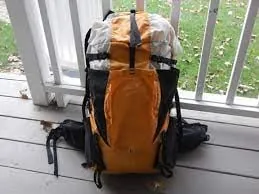
- Measure your loaded backpack including all exterior pockets and straps.
- Check your specific airline size limits before arriving at the airport.
- Remove trekking poles and sharp tools, as security will confiscate them.
- Compress compression straps tightly to prevent snagging on baggage scanners.
- Choose a travel backpack with a stowable harness for easier handling.
Hiking Backpack as a Carry On
Most carriers allow a hiking backpack in the cabin if it meets standard dimension rules. Soft outdoor bags easily squish into the overhead bin sizer. However, loaded multi-day trekking packs often exceed maximum allowable depths. If your bag bulges past the metal frame, agents will force you to check it. Always verify exact dimensions for your ticket class.
What Are the Size Limits?
Airlines enforce strict linear dimensions for cabin baggage. These measurements include all external pockets, hip belts, and shoulder straps.
| Airline | Maximum Dimensions (Inches) | Weight Limit |
|---|---|---|
| Delta | 22 x 14 x 9 | None |
| United | 22 x 14 x 9 | None |
| Southwest | 24 x 16 x 10 | None |
| Ryanair | 21.6 x 15.7 x 7.8 | 22 lbs |
Budget carriers enforce these rules much more strictly than legacy airlines.
Measuring Your Pack Correctly
To measure a soft bag, pack it fully and tighten all compression straps. Use a tape measure from the floor to the top of the highest grab handle. Measure the width across the broadest point, and the depth from the back panel to the furthest front pocket. If your backpack frame extends beyond the fabric, include that rigid structure in your total linear inches calculation.
Best Hiking Backpacks for Cabins
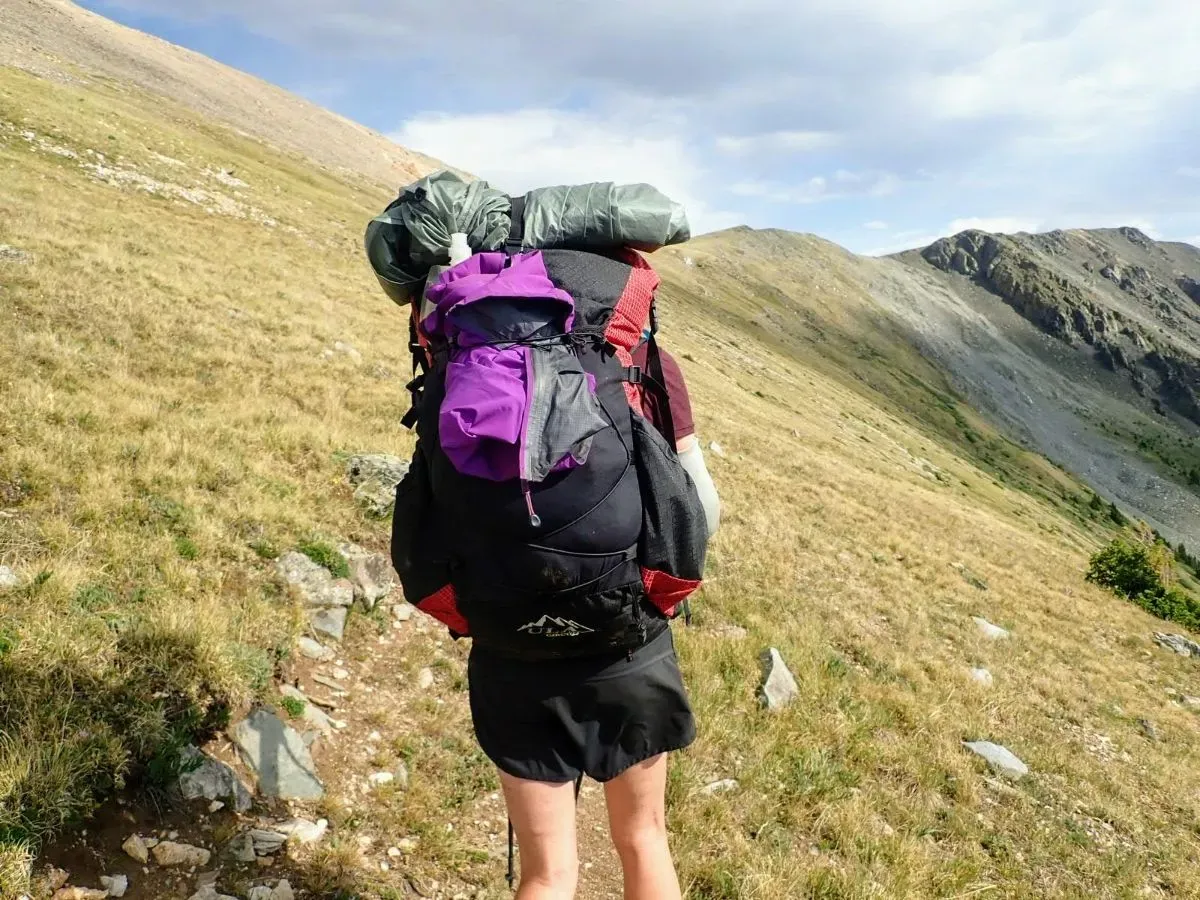
Certain outdoor brands design packs specifically to maximize cabin space. These models balance trail comfort with strict airline compliance.
| Brand & Model | Volume | Dimensions (Inches) |
|---|---|---|
| Osprey Farpoint 40 | 40L | 20 x 14 x 8 |
| Cotopaxi Allpa 35 | 35L | 20 x 12 x 8 |
| REI Co-op Flash 45 | 45L | 24 x 14 x 9 |
| Deuter Transit 40 | 40L | 21 x 13 x 9 |
The Osprey Farpoint remains a top choice because its harness stows away behind a zippered flap, preventing snags on the baggage carousel.
Are Trekking Poles Allowed Inside?
Pro Tip: Never pack sharp outdoor equipment in your cabin bag.
The Transportation Security Administration strictly prohibits trekking poles in the cabin. Security officers view them as potential blunt weapons. You must pack collapsible poles, ice axes, and camping knives inside your checked luggage. If you attempt to carry them through the checkpoint, agents will confiscate the gear. Check the TSA prohibited items list before packing your outdoor equipment.
Managing External Straps and Frames
Warning: Loose webbing causes major headaches at the airport.
Dangling shoulder straps can catch inside the X-ray machine belts, potentially damaging your gear or delaying the security line. Tuck all loose ends into the pack body or secure them with rubber bands. If your pack features a rigid aluminum stay, ensure it doesn’t poke through the bottom fabric, as exposed metal tips might trigger a manual bag search.
Navigating Frame Sheet Scanning
Internal frames rarely cause issues unless they look suspicious on the scanner. Dense frame sheets and thick hip belts can obscure the X-ray view of your packed contents. When placing your bag in the plastic bin, lay it flat rather than standing it upright. This gives the security scanner a clearer profile of your belongings, reducing the chance of a secondary inspection.
Packing Liquids and Trail Food
Outdoor travelers often carry specialized nutrition and hygiene products. All liquid camping soaps, sunscreens, and bug sprays must follow the standard 3.4-ounce rule. Solid trail food like jerky, nuts, and energy bars are perfectly fine. However, spreadable items like peanut butter or gel packets count as liquids. Keep your camp stove completely clean and free of fuel residue, or security will confiscate it.
Common confiscated items include:
- Camp fuel canisters
- Pocket knives
- Bear spray
- Ice axes
Checking Bags at the Gate
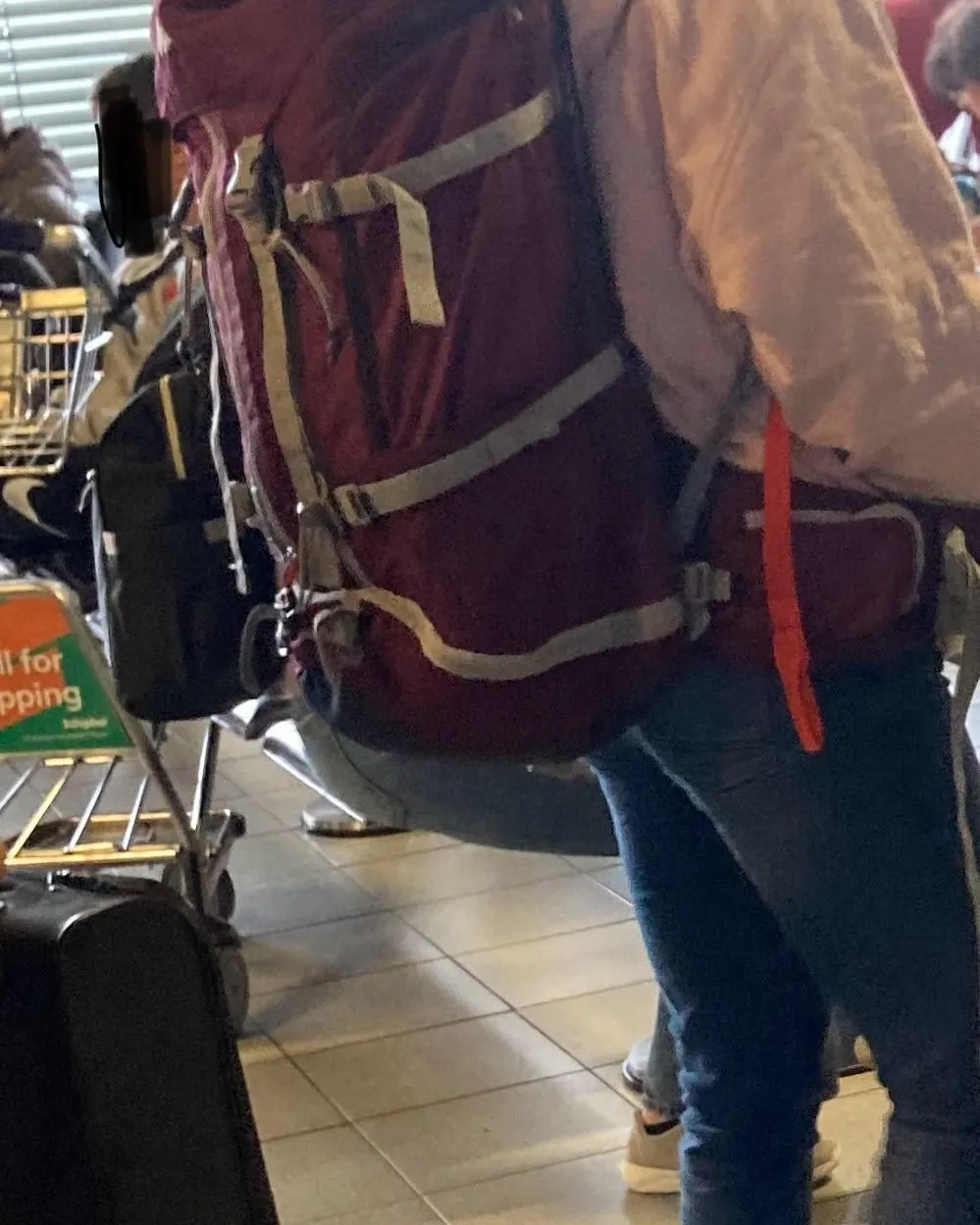
If your bag fails the sizer test, the gate agent will tag it for the cargo hold. You must quickly remove all lithium batteries, power banks, and essential medications before handing it over. The airline will place a heavy gate check tag on the handle. You’ll retrieve the pack at the standard baggage claim upon arrival, not on the jet bridge.
Frequently Asked Questions
Can I bring a 50L backpack as a carry-on?
Usually, no. A fully packed 50-liter bag typically exceeds the standard height limit. While some soft 50L packs can compress down to fit, gate agents will likely force you to check it if it looks overstuffed. Stick to 40 liters or smaller for guaranteed cabin compliance.
Do airlines weigh hiking backpacks?
Legacy US airlines rarely weigh carry-on bags, focusing mostly on physical dimensions. However, international and budget carriers frequently weigh cabin luggage at the gate. If your packed hiking gear exceeds the posted weight limit, you’ll pay hefty oversized baggage fees.
Can I carry a hydration bladder on a plane?
Yes, but it must be completely empty when passing through the security checkpoint. Once you clear security, you can fill the water bladder at a terminal drinking fountain. Leaving water inside will cause the bag to fail the X-ray screening process.
What if my backpack is slightly too big?
If your bag is only an inch too large, soft sides might squish into the metal sizer. However, if the rigid back panel prevents it from sliding in, the gate agent will require you to check the bag, potentially incurring standard checked baggage fees.
Conclusion
Measure your loaded pack today and compare those exact dimensions against your airline’s official cabin policies. If it exceeds the limits, rearrange your gear into a smaller daypack right now to avoid expensive gate-check fees and delayed travel plans at the airport.