
Yes, but only if your backpack fits under the seat in front of you. Most airlines allow both bags for free. Basic economy tickets on airlines like United or Spirit often charge for a carry-on. Check your boarding pass right now to see your fare class.
Can you take a carry on and backpack
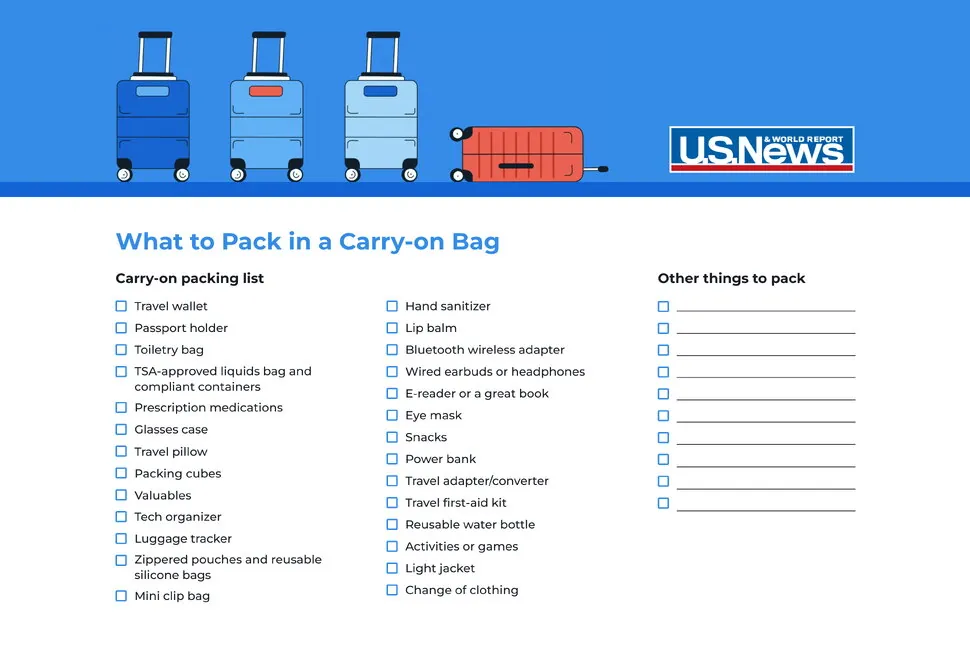
Your airline ticket type determines if you can bring both bags into the cabin for free. Full-service carriers treat the backpack as a personal item, while budget carriers often charge for the larger bag.
| Your situation | Answer | Why |
|---|---|---|
| Standard ticket on Delta, American, or Southwest | Yes | Both bags are included with your base airfare |
| United Airlines basic economy ticket | No | Only one small personal item fits the fare rules |
| Spirit or Frontier base fare | No | Carry-on bags require an extra paid baggage fee |
| Traveling on a small regional jet | Yes, but | Overhead bins fill fast; roller bags get gate-checked |
| International economy flight | Yes, usually | Weight limits apply; combined gear must stay under limits |
| Backpack is larger than 18x14x8 inches | No | A large pack counts as your full carry-on bag |
Space limits that determine your bag allowance
Under-seat dimensions make the real difference between a free personal item and an expensive surprise. If your backpack can’t slide completely under the seat, the airline treats it as your main overhead luggage. This leaves no room for your rolling suitcase.
Most major domestic airlines require a personal item to measure 18 x 14 x 8 inches or less. Your wheeled carry-on bag generally must stay within 22 x 14 x 9 inches to fit the overhead bins. The physical space inside the plane is limited, as your legs share space with your backpack. Budget airlines enforce these limits using metal sizers. If your pack fits inside the frame, you can board; if it sticks out, you must pay.
How to pack two bags correctly
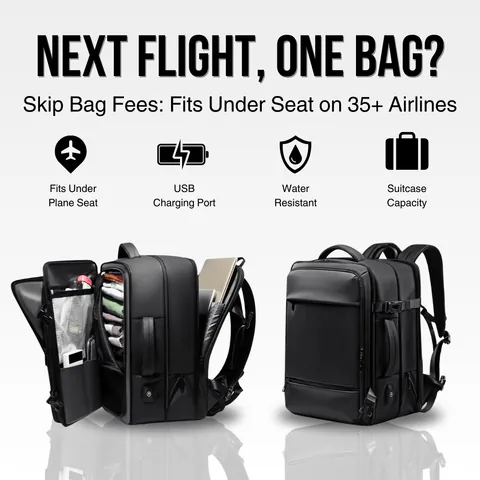
You can carry both items safely if you follow a clear packing routine. Preparing your bags properly at home prevents delays and extra fees at the boarding gate.
- Measure both bags with a tape measure while fully packed. Measure from the floor to the top handle, and include wheels and side pockets to verify your rolling bag stays under 22 inches.
- Pack heavy electronics inside the backpack. Put your laptop, tablet, and chargers in your smaller bag so you can reach them quickly during security checks.
- Keep liquids right at the top of your backpack. The TSA liquids rule requires containers of 3.4 ounces or less in one quart-sized bag, which you must pull out fast at standard checkpoints.
- Slide the backpack over the rolling bag handle. Use the pass-through trolley sleeve on your pack to roll both bags smoothly with a single hand.
- Push the backpack under the airplane seat feet-first. Place the bottom of the bag facing away from you so your feet have room to rest on either side.
The bulky backpack trap
Overpacking creates sudden costs at the gate. Soft bags stretch past legal limits when stuffed.
If your bag doesn’t fit completely beneath the seat frame, airline agents will charge you a gate-check fee. Avoid this penalty by checking your pack at home: press it against a flat floor. It must compress to eight inches thick.
When to check your bags instead
Boarding with two bags doesn’t work for every traveler or trip. Gate agents will stop you from taking both items into the cabin under specific conditions:
- The flight crew announces the overhead bins are completely full on a crowded flight, requiring you to gate-check the larger suitcase.
- Your backpack uses an external metal frame or camping hip belt that can’t bend under the seat frame.
- You carry medical devices alongside a pet carrier, which uses up your single under-seat space allotment.
In these situations, a passenger service agent at the ticket counter must check the larger bag into the airplane cargo hold.
Frequently asked questions
Can a backpack count as a personal item?
Yes. A backpack counts as a personal item as long as it fits under the seat in front of you. Most airlines limit this size to roughly 18 x 14 x 8 inches.
What happens if my carry on is one inch too big?
A gate agent will charge you a gate-check fee that’s much higher than the cost of prepaying. The airline then sends the bag down to the cargo hold with standard luggage.
How big can my carry-on bag be?
Your rolling carry-on bag must measure 22 x 14 x 9 inches or less for most US domestic airlines. This total includes the wheels, outer handles, and packed side pockets.
Does Southwest Airlines allow a carry-on and a backpack?
Yes. Southwest allows one full-size carry-on bag for the overhead compartment and one personal item, such as a backpack, completely free on all standard tickets.
Is a hiking backpack allowed as a carry-on?
Only if its height stays under 22 inches. Most multi-day hiking backpacks exceed standard cabin measurements, meaning you must check them at the main airline ticket counter.
What goes in the backpack versus the carry-on?
Keep fragile valuables, medications, laptops, and travel documents in your backpack. Place clothing, extra shoes, and non-essential items inside your rolling carry-on suitcase for overhead storage.
Can I put my backpack in the overhead bin?
Only if you didn’t bring a second, larger carry-on bag. When carrying both items, crew members require you to put the backpack under the forward seat.
Pack and check your luggage
Measure your packed backpack right now with a household tape measure to confirm it stays within 18 x 14 x 8 inches. Both bags pass free boarding inspections easily when the smaller pack compresses down smoothly without forcing it. If the backpack frame won’t bend into those limits, step up to the check-in desk before security.